I didn’t manage to finish Beauty is a Wound by Eka Kurniawan — as much as I wish I had. It’s simply very long and I grew a bit bored of it’s endless cheerful acceptance of everything — and I love magical realism, the genre this book probably best inhabits.
Or maybe I was just a little bored with the suffering under the Dutch colonialists. I really did like the book, I just ran out of steam. I am sure there is some really good stuff at the end.
It starts with a woman, Dewi Ayu, climbing out of her grave after 21 years, in search of the child she chose to never see because she is so bored of her daughters being beautiful. Between page one and 4 you’re treated to the best set up of a novel I’ve read in a long time.
It’s somewhat relentless in it’s cheerfulness towards terror, grief and hardship — as is the character of Dewi Ayu. This kind of easy acceptance of the horrors, and a half-smile from the narrative voice throughout makes it kind of bounding read, if you’ve got time for it! Maybe I will come back to it.
The other volume I read was a somewhat slimmer one in the for of Anne Carson’s Autobiography of Red. Having read RED DOC > last year, I know I am coming at this about-face — but nevermind. Carson’s poetry is some of the only poetry which still sticks the electrodes in. Give me a story about monsters and their suffering, mixed with classicism and a good dose of pathos and bathos and I’m all yours.
Carson is particularly good at these long, modern, narrative poems. Autobiography of Redfollows the worried and bullied monster, Geryon. Worried very much about how hard it is to be red, and trying to find acceptance in the arms of a boy too cool for him, Herakles. Geryon is a boy who is also a monster with wings and long stalks with eyes on the end — and as a player in Hercules’ trials, seems desperately resigned to a defeated dark place. It’s a sad brace of pages.
I also read Carson’s If Not. Winter— a translation of Sappho beautifully laid out — each pair of pages showing the Greek and the translation, taking not only the fragments, but reported stories from Dionysius and others — bringing a little more perspective on the lost whole.
This is a ghost house of a translation. Many pages just containing the white space, and a single translated fragment against the Greek. Some of these pages are deeply haunting and will often stop you short. Joyusly short to dash through for it’s scarce use of language.
Finally, I returned to Of Giants: Sex, Monsters, and the Middle Ages by Jeffrey Jerome Cohen and polished off another essay. The book wanders through several version and views of giants and monster from the middle ages. It discusses, in part, how the mutated and unusual bodies which are nearly human but “perverted” and therefore more satisfying for a society’s hero to kill and return back to the status quo which is lauded as natural. It’s a really good crossover of identity politics and medieval literature with some excellent ideas on how giants are represented and used to re-enforce norms.
I stopped painting and drawing a long time ago. I cannot remember when I last picked up a paint brush and mixed oils. I think I used to be good.
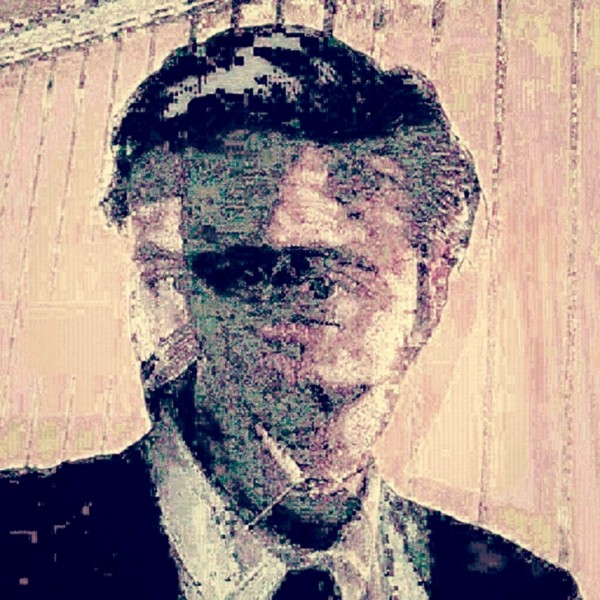
Quite an early one
Good enough, anyway. Good enough to have to ignore encouragement by others to pursue further it in some way.
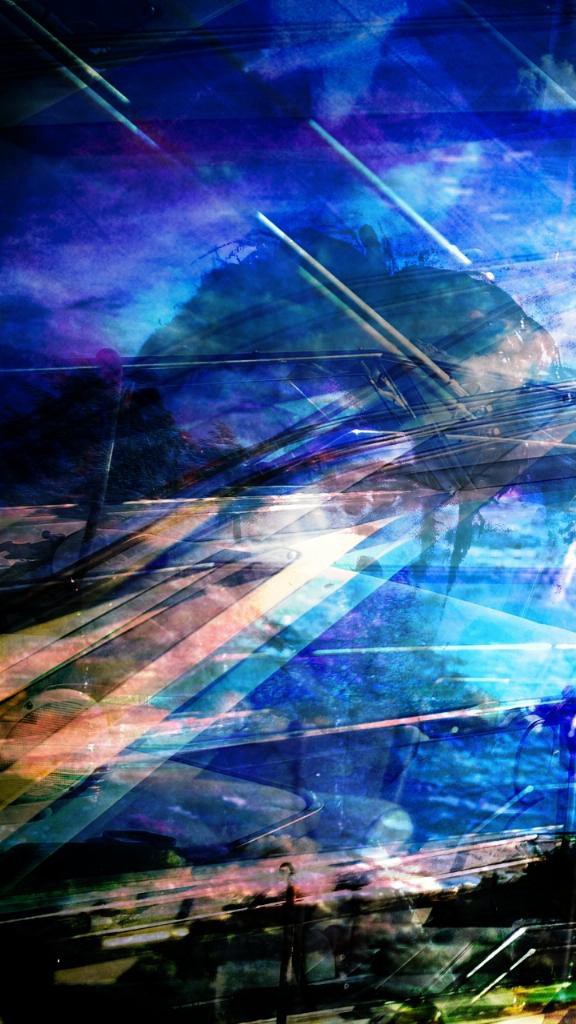
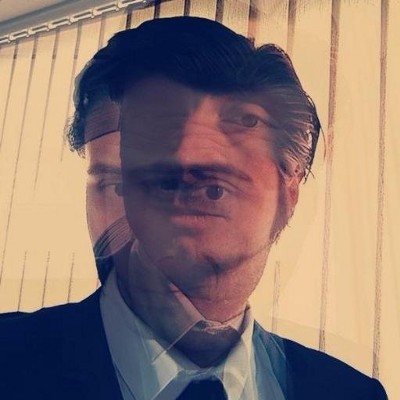
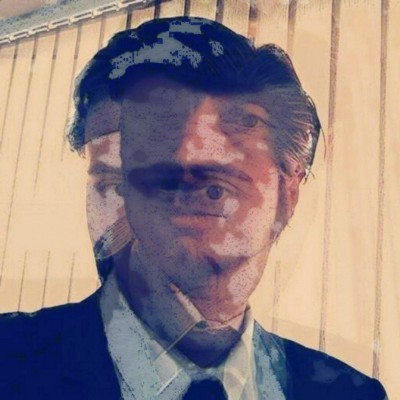
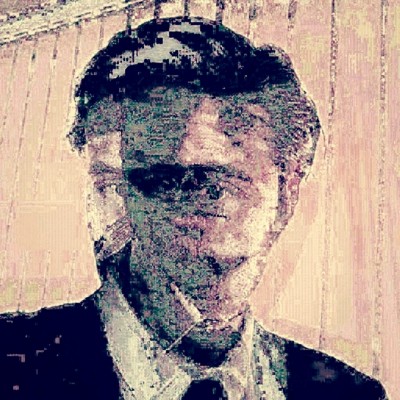
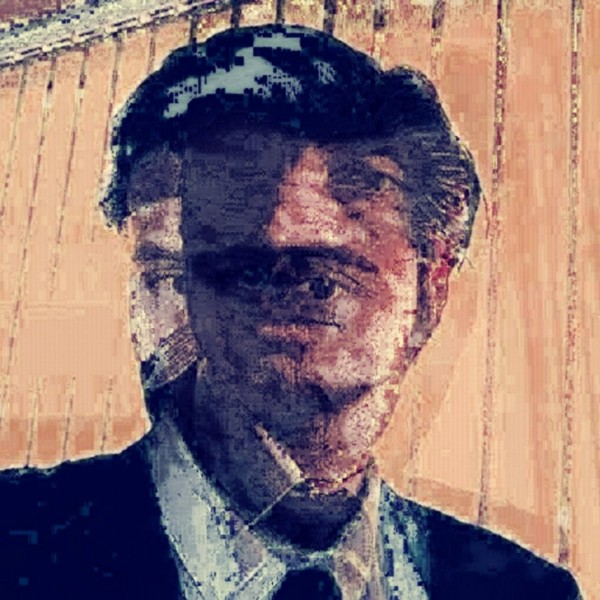
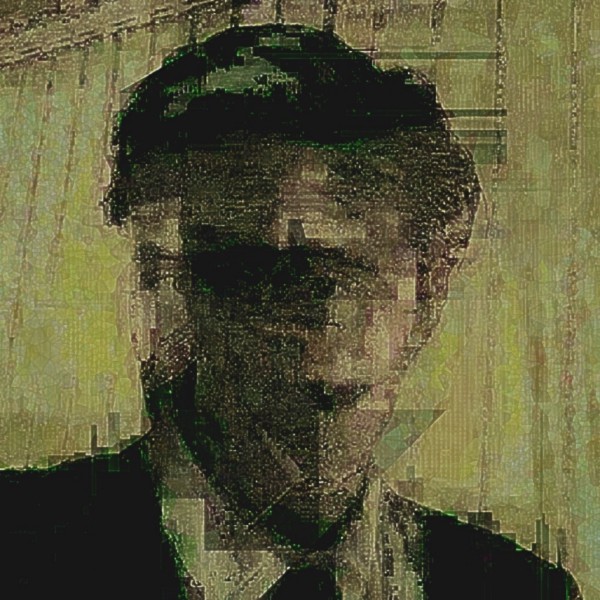
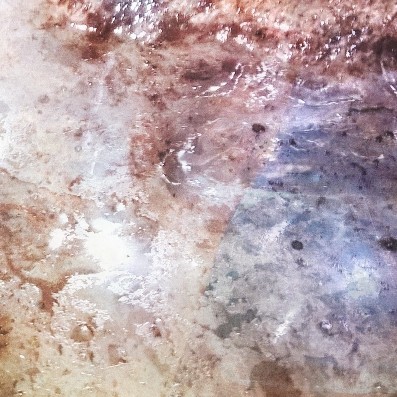
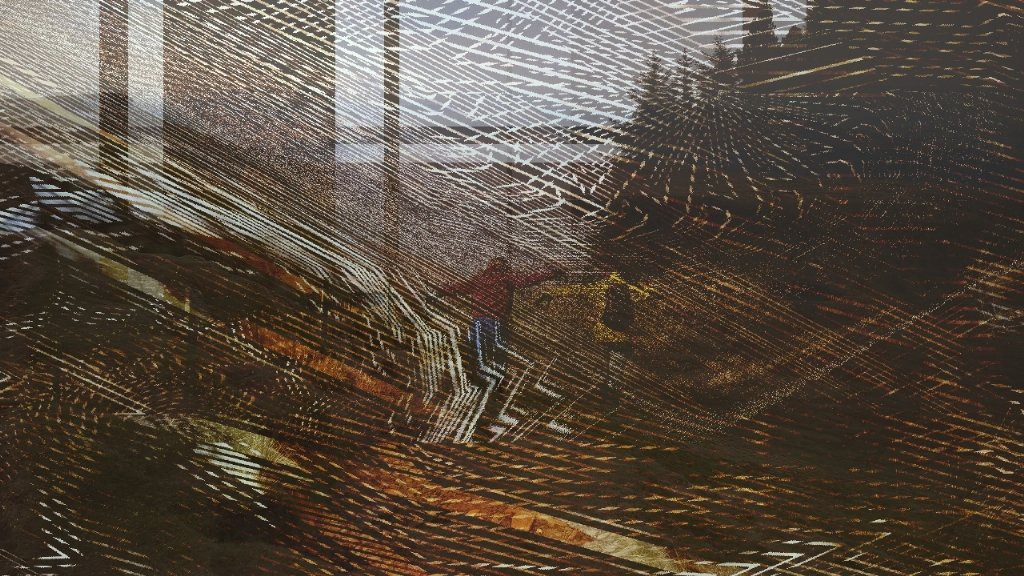
Recently I have been having fun with composition and colour again though — through these throwaway “glitch” pieces.
They’re very simple to create, and don’t require much input beyond a digit, and being trigger-happy enough to have raw material to process.
I would like to explore this strange involvement in glitched, layered, obscured art I began creating — and a little bit of the why as well.
You don’t have to be good at art to make something that feels valid with these things, you just have to be good enough at knowing what you like.
These “glitches” are never going to be as wonderful as paining a Rothko, but then, why would you want to make a Rothko in the first place? It has been done. You can’t do abstract expressionism on a train anyway, or in a few moments before a meeting. I feel you might have to mean it more.
One of the reactions to my father’s death was to begin to take a lot of pictures. I think this is probably a cliché I put a great many patient people, who loved me very much, through. Sorry about that if you’re reading!
My weapon of choice for this was the terrible camera built into my phone at the time. It was 3 megapixels at best, but likely 1.3 megapixels.
It doesn’t take you long to learn to love the abstraction that come out of that kind of terrible piece of technology.
Later, at university, I snuck into the photo labs (it wasn’t my department, they weren’t my resources to use) and started developing medium format pictures taken in a box brownie camera. I found that you could mix images together during development, exposing the paper, swapping the film, covering and exposing again. It was obviously a bit kitsch — but also sometimes quite fun to break an image I’d taken of a place or person I love.
one of mine.
It is interesting how the original goal of recording everything as a direct action of losing something, mutated to being about breaking recordings of the things I love.
That degradation in image, that real glitch in a game, that rush of complete abstraction that is entirely from something 100% solid and real to you. It’s probably a bit of a perversion.
Pure abstract thought isn’t about the things of the world. It’s just a certain fetished form of wishthinking. Taking something you love and stretching it until it no longer fits within its original constraints (which might include agreed perception and reality) through ritualized reworking has a higher/more expensive to extract, intrinsic value.
I used that shitty (brilliant) camera phone to take pictures to help me remember although, of course, it was too late. Maybe I took them to never forget again. Or something.
Anyway, as I grow older and further away from the sources of my melancholy I find that remembering is the same as playing a tape over a million time, you start to break your memories. They go fuzzy, with crackle that starts as endearing, and soon become alarming as the real noise of loss.
There’s something satisfying about removing the craft from the creation of art. You can focus instead on the process of picking the good versions generated by machines, or select an abstract degree of degradation.
You’re part of the process, adding something in like “taste” or at very least “preference”. The addition of your time to the process makes it slightly more valuable.
Your value in the process is only that you’re giving your time to it. Because your time can always be quantified into cash, there is an economic value too.
So, when we procrastinate we’re always burning cash as much as we’re burning valuable minutes of our lives. But, then, maybe they’re not valuable at all.
This means there is a higher cost of creation and abstraction on either side — from the viewer who has to work harder to find meaning, interest, joy, etc — and from the “artist” who has to accept that there will be a number of failures (and failed, non-craft minutes) before achieving a pleasing work.
This is probably the grossest way to quantify art.
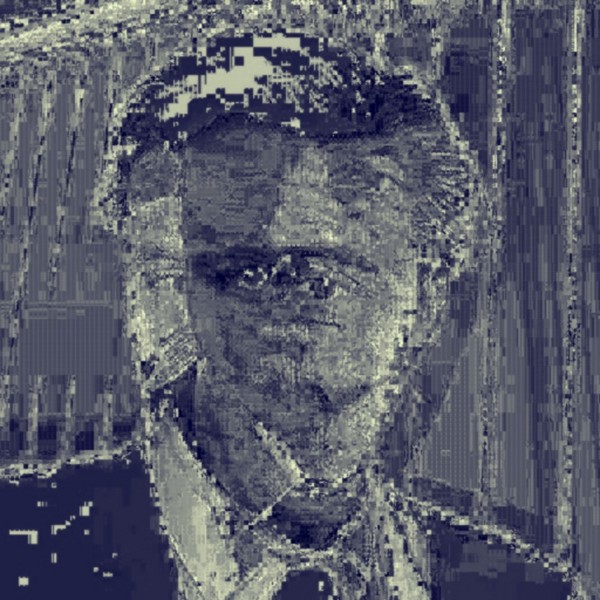
A rare black and white glitch/collage
It’s possible you’re interested in making these kind of “glitch” pictures yourself. Here’s my fool-proof guide to making this junk.
How I make glitch art
Take a picture, or several.
Run it through a series of “glitch” apps, photo manipulation apps and the occasional twitter bot. These are on my phone, it’s not even a great phone.
Choose the good first process information.
Layer up, collage, throw together. Reapply stage 2 if you like.
Repeat until something aesthetically interesting turns up
Really, it’s less of a skill and more of a meditative processing activity.
It usually happens somewhere boring: while the kettle is boiling in the work kitchen, while I’m running a bath, waiting for someone to do something or if I turn up a bit early and waiting in the car is the only appropriate thing.
It does feel like I’m getting better. And when I find a new shit photo filter/manipulation app for my phone, I get a bit excited. Usually the really naff ones are the ones which can abused to degrade the images the most.
I get better at it in the sense that I think some of these are actually good? — and it takes me less time to process through them.
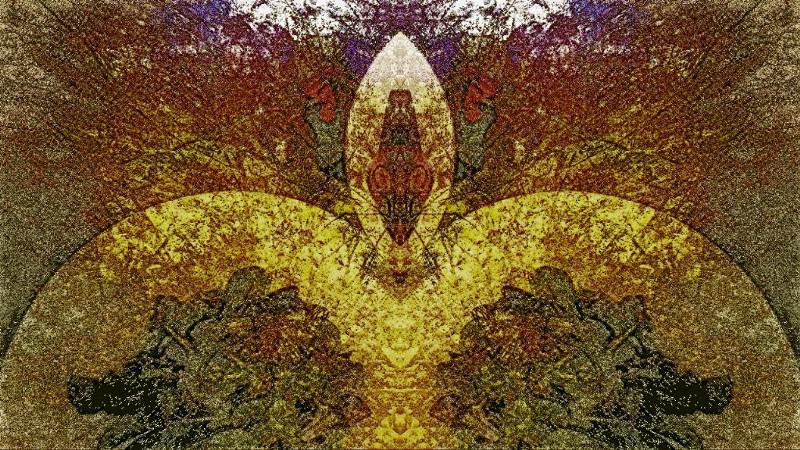
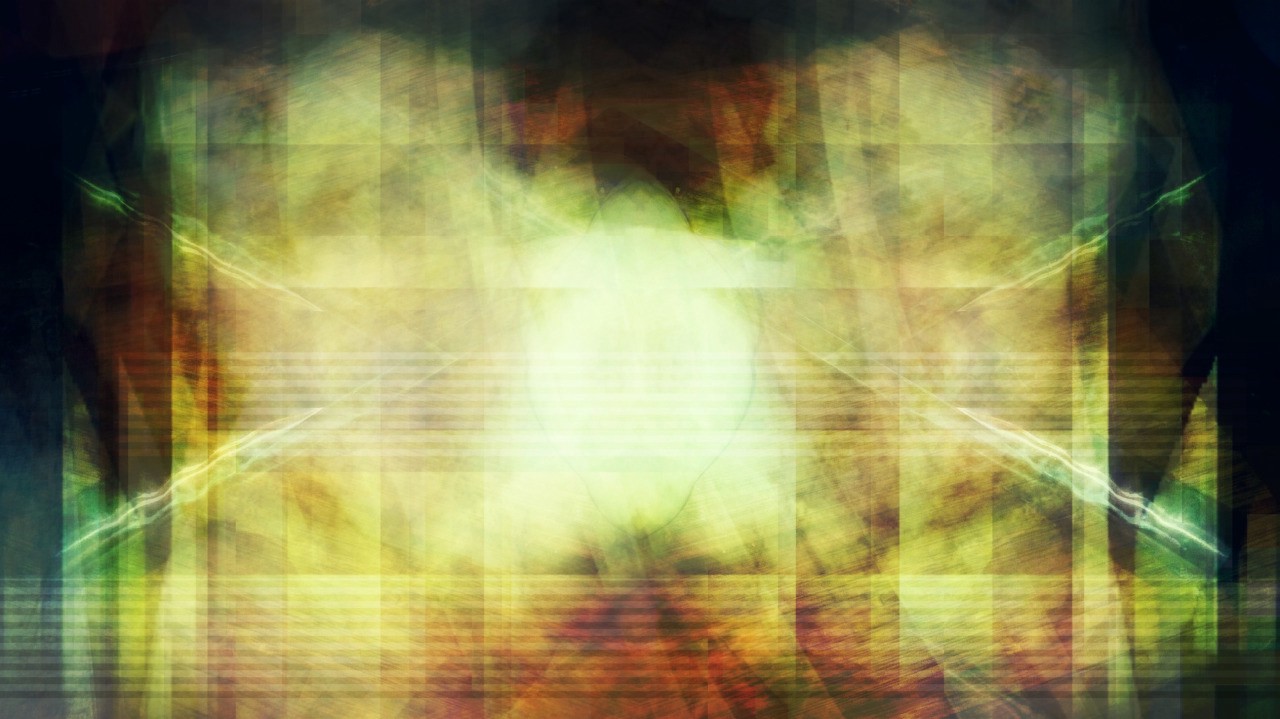
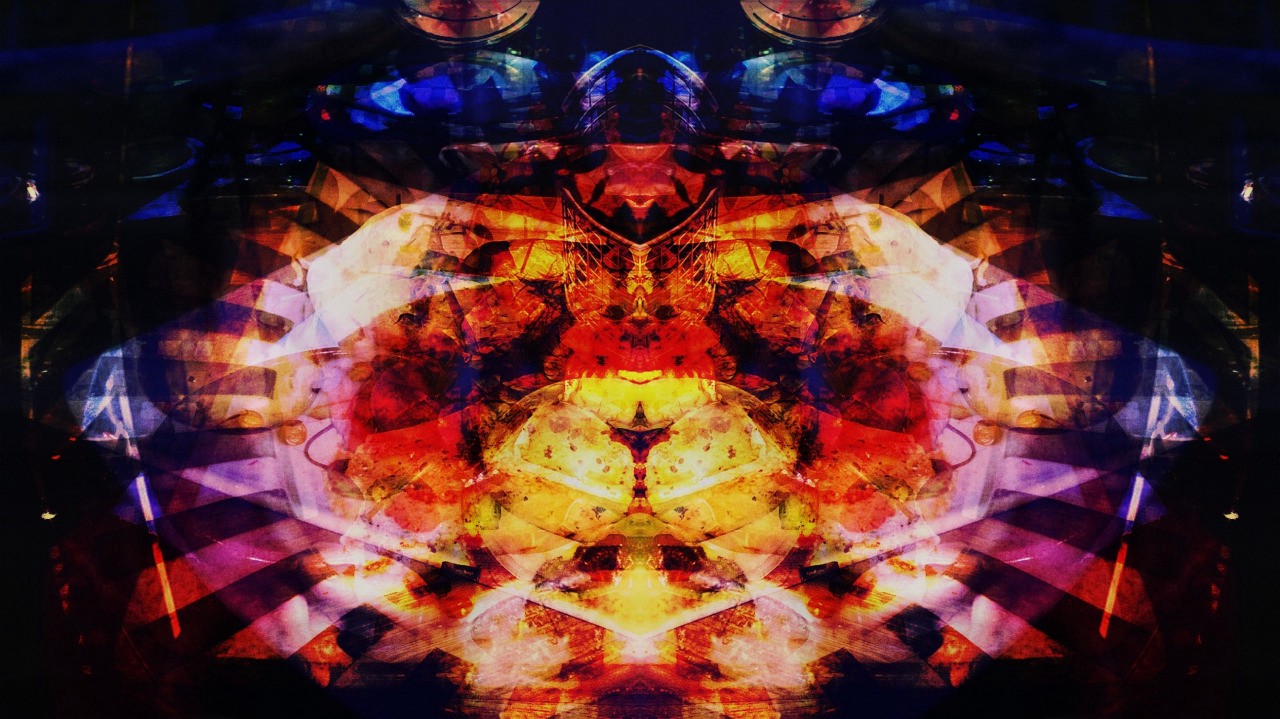
An early one using a kaleidoscope app to create patterns to add extra texture.
The stuff that works best, in my opinion, is the stuff with clear relics in them from the original works. They’re the shapes and objects with some symbolism and meaning that you can react to when you run your eyes of them.
And you do, mostly, run your eyes over them and shrug. You can spend some time with them if you like, but I don’t expect much more than a shuffle of the shoulder and maybe hitting the share button.
Dynamic shapes sees to give better composition. These are often developed with the rougher and more distortion orientated apps.
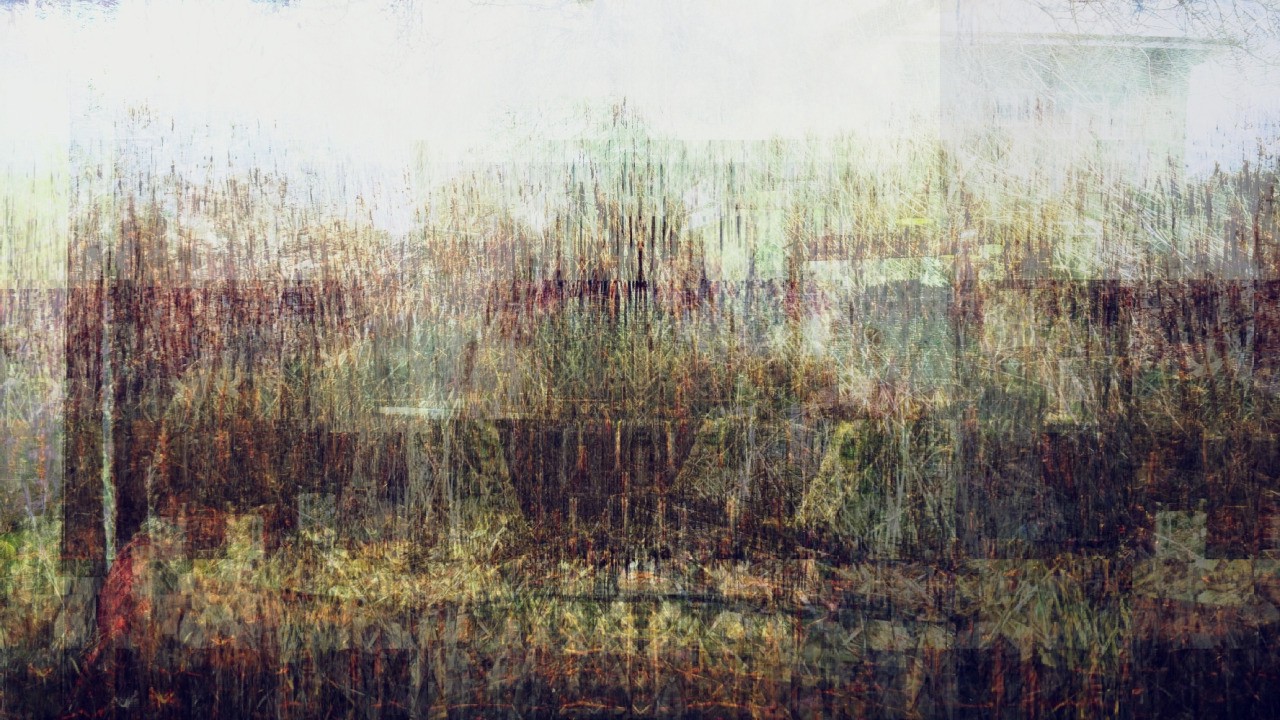
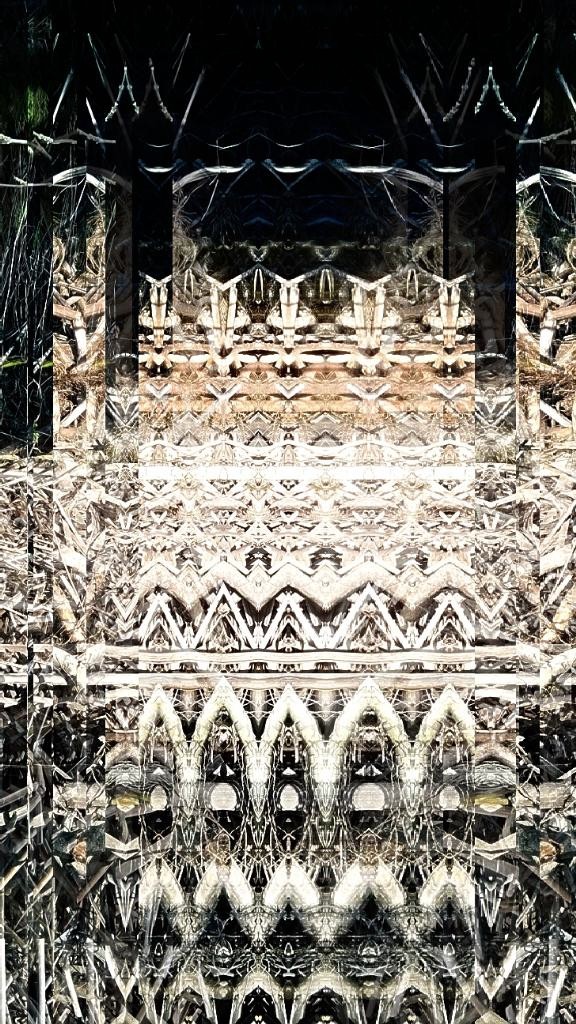
The more abstract final works are those where I have worked with very natural base pictures — reeds, broken branches, grass, moss, texture. This is because I struggle with finding a way to give the mess of nature any form in the messy composition.
A fallen willow from the lake, which started to grow again immediately. Not that it is really here in this composition.
Part of the process is reducing a memory into a single picture. I could just take the best picture and stick it on instagram. But it doesn’t seem to carry the condensing aspect, or the abstraction (or corruption) of memory
That might be a bit flimsy. I’ll have to nail it down at some point. But we know we forget things, we know we stretch out the tape every time we replay it and we know that we create false memories all the time.
These are the degraded false memories that I have chosen to curate. I don’t think I’ve nailed it down, it’s still flimsy. Maybe that’s the point I’m making.
This was a good day on the river
Sometimes I like the obvious patterns which lend themselves to abstraction. A carpet in the family home, some strange wallpaper or tiling. You can fold these to form new landscapes.
I think this was a patterned carpet
The important thing is to remember that this isn’t an artistic/craft process. You could probably run code to do what I do manually, and then simply pick your favourites at the end.
That’s why I like the Glitchbots.
These tiny robots who live on twitter can do image processing for you. It’s better than you doing it youself as it’s purposefully unintentional. Here’s a few I have used before.
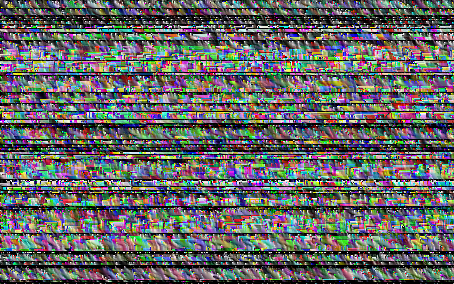
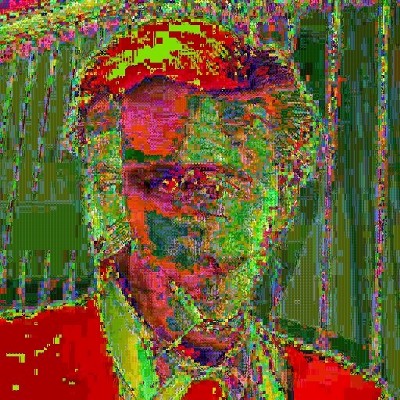
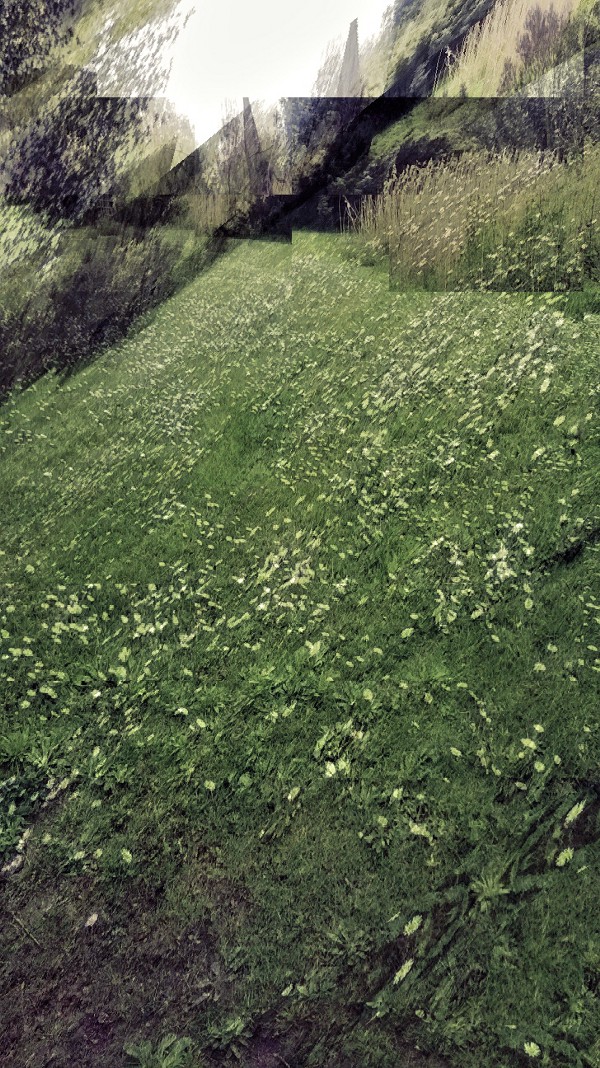
Badpng is probably one of the best examples of a glitch-bot. It takes a picture in some other file format and sends it through a broken png converter. The result, although intentional, is a series of glitches. Sometimes it’s pretty good.
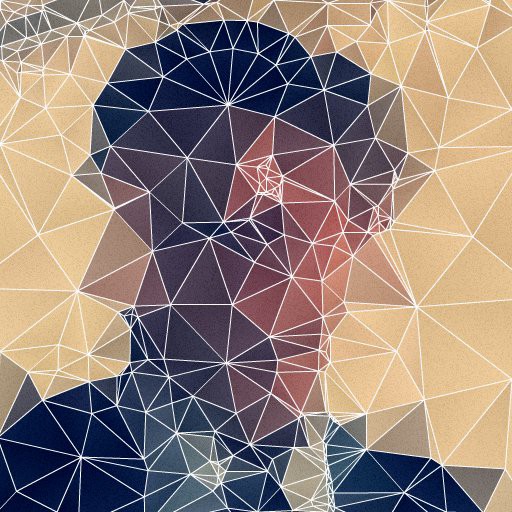
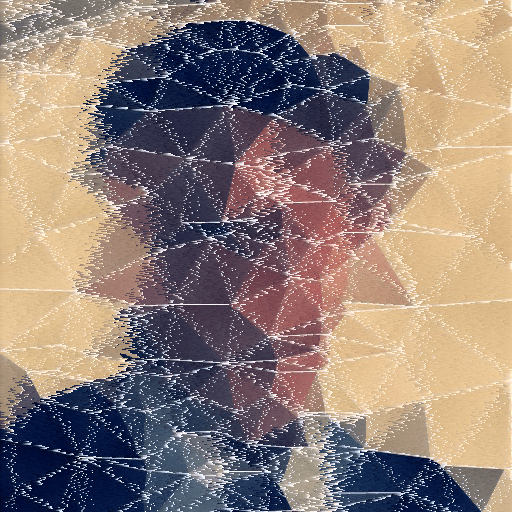
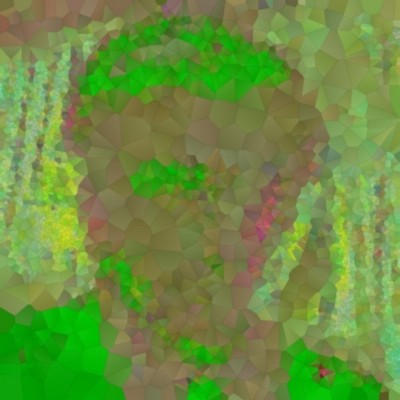
I like lowpolybot especially. You can give it something like this:
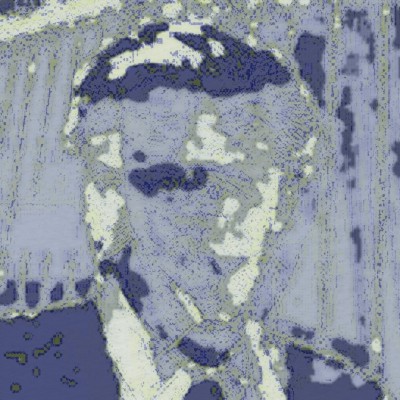
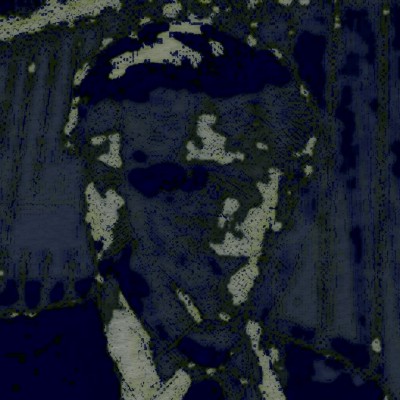
Then, you can use both together. Blending them. Because often you’re looking for individual items to “come through” on what might otherwise be a highly blended mess of colour and texture, the #edges that lowpolybot gives you allow you to provide focus and interest in a picture. Cheers robot!
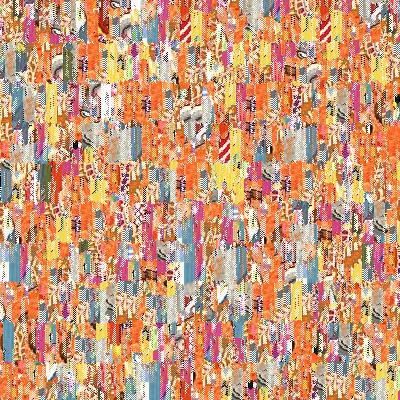
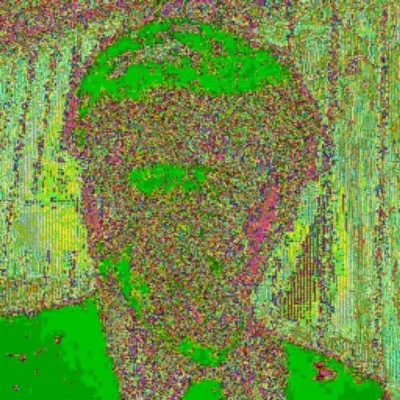
Pixelsorter is also good fun. Here’s what happens when I put the above into Pixelsorter:
I’d like it even better if they’d talk to each other with my images, but they seem to have been created to be non-abusive like that. Good code, bad for lazy processing.
Speaking of which, I once got caught in a chat between @wisdead_ebooks and the, now famous, @oliviataters. This was terrible and flattened my phone battery with notifications immediately.
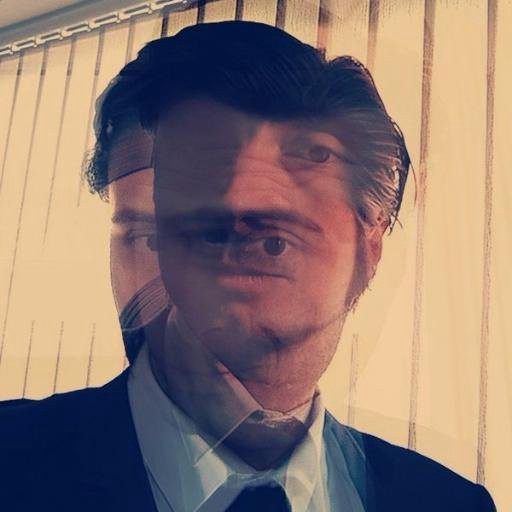
Some of the bots talk to you when you RT them. Like @imgquilt, who gave me this:
Does this belong to me more than the others? Or does it belong to the bot more because I didn’t even supply the original image for it to work with.
Anyway, these processed images can get built into the layers of the glitchwork.
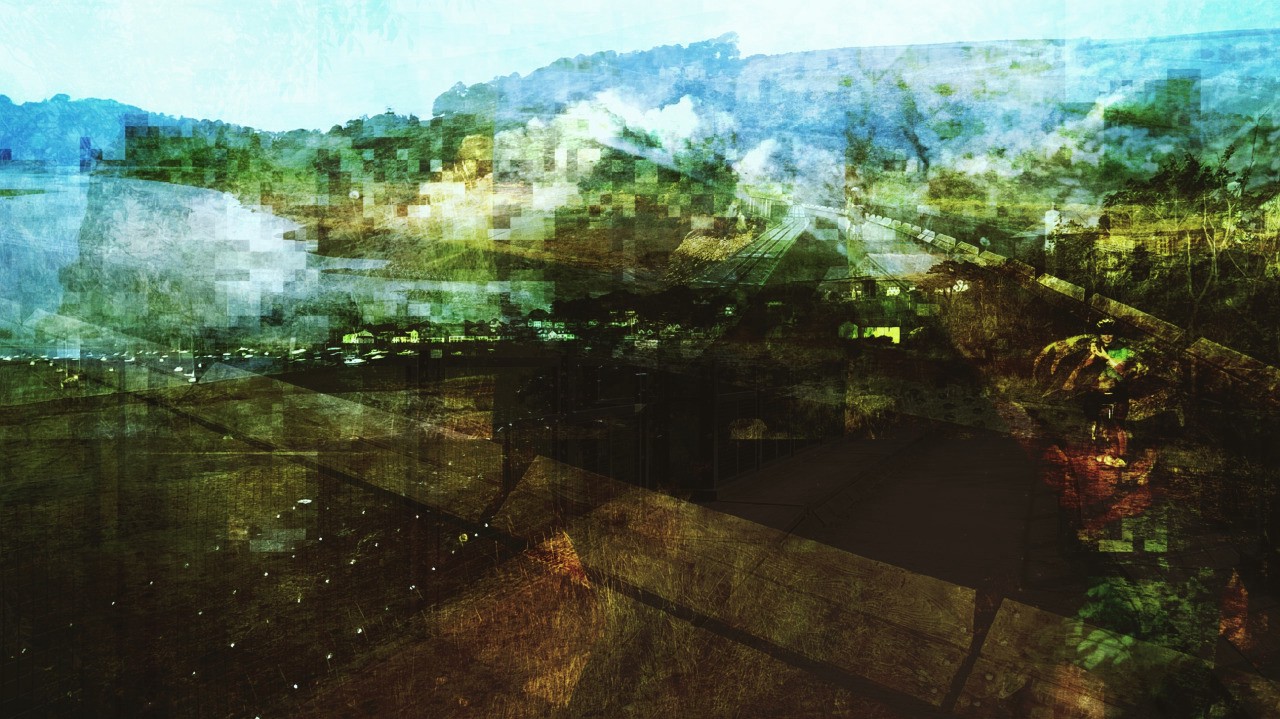
Here’s a few variations of the same image at different stages after passing through glitchbots, and a few edits of my own. Special thanks to @badquantizer for the text. That’s a new bot.
I’m saying this is all about bots, but it’s not really. It’s about code not working as human being expects.
Recent low-grading work
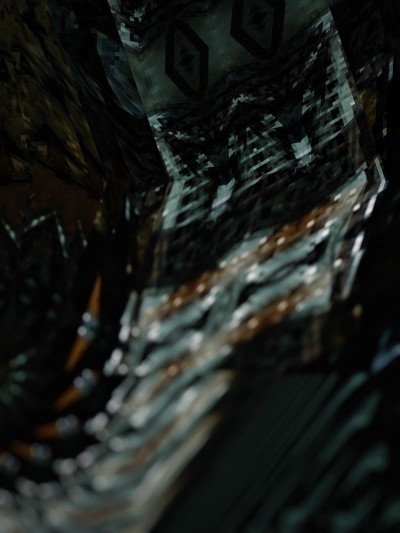
When it comes to code not doing what you’d expect, we can look at game glitches. Often these aren’t quite as artistic, but they can be interesting! Games are such unwieldy things made by so many people with such variety in control inputs that there’s going to be an untested case where a game becomes broken. Especially now that developers expect to patch a game in the first week.
This is a really exciting idea as it shows the lack of agency huge companies like Nintendo, Ubisoft or Capcom have. With play-testing and QA so much part of the system, you’d expect to avoid most glitches in games, and yet, many games can be broken if forced in just the right way.
Minor works
Is a glitch simply when a process goes wrong, but doesn’t break down entirely? The roots suggest so.
The entomology of “glitch” is unclear — but seems to be related to the computer science of 1960s America: an the unepexted surge of power in a system.
Another theory seems to take it to Yiddish — to slip is “glitshn”, in German “gleiten” is glide and it doesn’t take much to slide from one to the other. I have also seen a glitch referenced as a “momentary jiggle” in a system.
That’s what we’re looking for — a momentary jiggle.
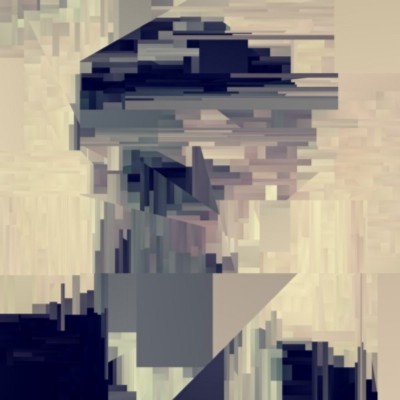
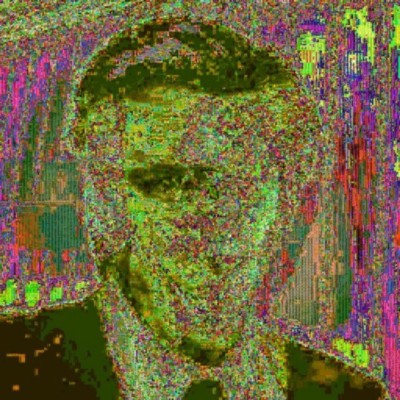
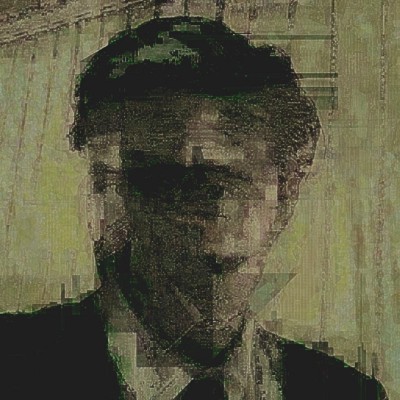
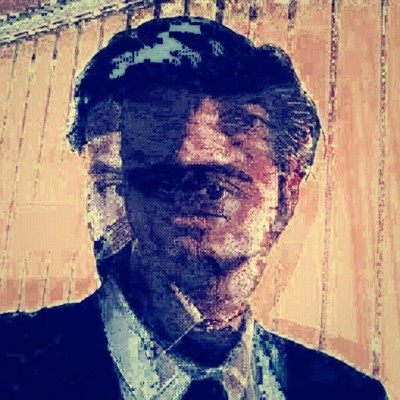
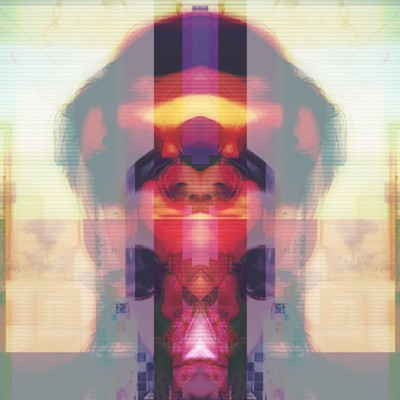
So here’s some momentary jiggles I have thrown together over the last year or so. Yes it’s about a craftless creation, and also about a degradation of memory, but also spending some time with that memory before it fade away without effort.
I’d love to do a gallery show of these, or something. What could we do with that? Project them very large? Make you put on a warm helmet which projects this stuff right into your retinas? Maybe just postcards or something. I don’t know if we’d manage to get past the shrug.
Generally, I think these might be a bit useless for helping me remember a place, or a time or a feeling. But I think it helps me think about a place or time while I am creating. I know I am going to forget everything anyway, but at least I made some fun pictures on the way — and thought well about it while I did.
Let me know if you like these at all. Or if you’d like to use them for a project. I can probably find higher quality versions, if you like. All I would need in return is a link to my twitter and my name written out in full.
And this is probably the end. If you like you could sign up for my newsletter, called “Etch To Their Own” in which I discover and discuss rituals, systems and process with cool people, or — failing that — just anyone who will talk to me.
I may come back to this in the future an flesh it out a little. I am sure there are better things for me to say on the subject, so maybe I’ll just delete all the words?
So yeah, luckily the guys from Y Combinator decided to leave a series of sacks of small mammal corpses for me to leap over on my evening run, and the rest is history. I really feel like that addition of toothy slugs and triple-processed rat skeletons made it feel like they got me unlike the other people who just offered me money.
Let’s unpack the challenges facing us at Bio-degradable inc.
What problem are we trying to solve at Bio-D?
There’s two problems we’re trying to solve here — the degrading time-slipped self, and the un-mooring of memories from the who you are now.
Your Traitorous Presentation of Self: We think the profile picture you’re using right now is tantamount to treason against the present. It’s from 3 years ago right? From that nice holiday you had that you still talk about and forget that you’ve been pretty much stationary for 3 years.
We’re trying to stop you lying to yourself by breaking everything you present about yourself online regularly. You will mostly be tending to a bio page which could stand in for yourself online. There’s no linear presentation of posts over time, there’s non of that mismatched context of serious-person-who has-actually-been-retweeting-cats-for-half-an-hour confusion for visitors.
You Decide What Memories to Maintain, Publicly — Every day: No memories will need to come back to haunt you about your dead dog, family or houseplant. Instead, you will be used to updating the information on your Bio-D page so often that the gap between “have an old cat” and “used to have a cat :(” is immediate as possible. If you want that information remembered on our site, you will need to tend to it daily.
What a good ritual that would be.
How can we do it?
We’re going to limit you in some ways, and demand your care and attention in others.
This is a powerful form of self care that mirrors real self care. I say mirrors, I mean replaces of course.
Ways in which your profile will degrade any give day:
Your images will glitch, or be reprocessed into worse versions of your images. We will send round an army of glitchbots to ruin the pictures of you, based on hand-coded pan-seared artisanal algorithms.
We will replace your good word with bad, weak ones. We’ll add in modifiers to your nouns and concepts which kind of weaken them. We’ll add in weak aphorisms, if you know what I mean. Again, this will be done by a greedy database troll-bot which lives in an unused comments section which we won’t enable.
While you will be able to make your profile beautiful with lovely fonts and styles, our director-bot will wander around changing things to comic sans and adding marquee tags.
Don’t worry though, we won’t mess about with your links, because that would be cruel and unusual. We’re trying to be only one of those things at a time each.
How do we keep it interesting?
Virus type spreading for viral changes, infect your friends! That’s right, we will make the kind of glitch running across your profile relate to the popularity of it. You link someone to your profile, they’ll be infected and have it apply to their profile, and any others they visit.
Seasonal changes to the kind of degradation to your profile! You’ll love what we’re going to do to that picture of your dog for Easter!
Sponsored degradation! Now your favourite brand can ruin your profile as well as the rest of your life. Sweet, like the taste of Pepsi.
Are you ready to bio-degrade?
Trick question, you already are! Enjoy your flesh while you have it!
Google is a word you type sometimes when you mean to type good
You’re worried you can’t remember anything without Google.
Google has all your stuff, and won’t give it back. Or if it does, you know it still has a copy, and if it doesn’t have a copy it will remember having had it anyway.
You can’t remember if it’s your name on the lease, or Google’s. You know you’re paying the rent.
Google is keeping track of who you’re friends with.
“Google, where did I leave my keys?”
“Google, you don’t have to go everywhere with me.”
Google wants you to talk to it.
Google asks you to fill in CAPTCHAs so it can understand written words and text in photos better.
Google owes your government money. Google thinks it would be better if it could access the market freely, but maybe stick some banner ads on GCHQ instead.
Google tells you it’s better at giving you the answers you want, you’re not so sure any more, but don’t know how to ask questions without Google.
Google is outside your home, taking pictures of your house. If they had let you know they were coming, then you probably would have mown the lawn.
I managed to squeeze in three short books over the last few weeks.
I do love a dense novel from time to time, but often I would prefer something tighter and more targeted. There should be more short, intense books that deliver an emotional payload without the burden of having to be 450 pages. Most writers make their point by page 50, and finish ironing it out by 150 at the most — the rest is just fireworks.
All three books this month feature some kind of childhood memoir — albeit fictional. It’s a particularly good mode of writing for setting apart the absurdity of actual grown-up life and the world that the children perceive.
I read Max Porter’s Grief is the things with Feathers in December, but I am including it as it was the last and best book I read in 2015. It is a true depiction of the haunting of grief. Anyone who has lost someone close to them will find the book familiar, it expresses the rage that grief gifts and the power it takes away. Through it’s voices you find all sorts of madness and softness — there is bargaining and extreme acts of kindness. You can probably find tears in the book.
The feathers belong to the crow, who moves in to the family home when the widower, having moved past the perfunctory elements of his wife’s death, funeral and so on, finally lets grief take hold. The story is told through the three voices of the widower, the two children “Boys” and the crow. The boys offer up the deep sadness of the world not understanding the importance of their mother’s death. The father plays out all the stressful distances he feels now he is unmoored. The crow, most enjoyably, talks to the madness of grief — and the strengths that it gives those in it’s thrall.
The span of the book takes in their healing too — and how that healing sometimes looks like hardening.
Pygmyrecounts the journal entries of a young spy sent from an unnamed ex-soviet republic to the US south. It is written in the broken, over-descriptive English of a child who has been through the mangle of a vicious system of brainwashing, training and brutality. The fun is in the satire of the American south through the distancing, over-describing language that comes from someone writing in a second language who is desperate to be exact. It’s gentle, and broadly expresses the warmth of that culture.
Describing the flowers in a mega-church (a dead mall lazarus’d into a place of faux-televangical Christian worship) as “plant genitals” still gets a chuckle from me. As does describing the wall-mart greeter as a “most venerated corpse” . The joy in reading it comes from these piecing together of the broken descriptions into particularly southern American scenes.
Our agent, and his fellow agents, are planning a disruptive and deadly event while also attempting to integrate themselves as a long term sleeper cell.
While it’s an interesting read for the language, it soon falls into traditional Chuck P territory of squishy over-sharing. It’s what I loved about him the first time I read Choke, or Invisible Monsters — but it has felt too familiar this time. Maybe I will come back to him one day.
The Notebookis a war diary of two twins ferried across the boarder to Switzerland from Hungary to live with their rural grandmother. Abandoned by their mother, they soon find that they are given chores and forced to sleep in the cold attic. They soon find a solution to their misery: to turn the experience into a set of exercises for understanding and enduring negative experiences. They lie still as if they were dead to practice in not moving. The fast to know the pain of hunger. The grandmother is an antagonist here, until they starts to apply their deviousness to her or to those around her.
This is a story of childhood coping. While they look upon the world with sometimes like amusement as they have learned to live outside it — as their grandmother has — and use their hardening against it. There is no healing here, but you can’t help but feel like you’re on their side — one which is fully from the point of view of childhood.
Whereas Grief is the things with Feathersshow as way that childhood coping and hardening can lead to a normal life, in Kristof’s novel we explore the idea that you don’t have to leave the outsider view of childhood behind, if you’re ready to act on the brutality of it.
Bonus: Pers Petterson’s Ashes in my mouth, San in my shoes. This is a childhood memoir which covers the small sadnesses of childhood in a way the others don’t. It’s not filled with tragedy, but the interconnected short stories all put Arvid at the centre of small failings of a working class Norwegian family. It’s jolly and boy’s own in its way in terms of the plot, structure and activities Arvid finds himself involved in — but his internal feeling of sadness, weight, and fear for his father (because he is so strong), compliments the other books mentioned here.
“Physical. Me.” he says — as team leader he’s sure of himself — no one else could do this task like he is going to. No one can be as sure of his ability to take on this physical task more than he after all.
And then this happens:
No, there was no way Ian could have known that he was going to put in the performance of his life.
Watching that, we were all joining the team in their desperate pleading with Ian. You can hear the desperation slip into their voices one by one. They move quickly from encouragement, actions, ideas, discussion to accepting that they’re not getting another crystal, and Ian must return to the group with his life-on-the-telly in tatters.
We’ve all suffered like Ian — especially in having watched him fail so terribly.
Ian’s trial was torture to watch maybe because of how sure, how serious he was when he took the challenge himself. It’s sad because all know what it’s like to fuck up.
Next.
Lorraine suffers a more terrible fate:
It’s like watching a dying bumble bee, with a broken wing, desperately smash its face against the window. It flails. It flails in a different way — you think it might even make it out of the window — to what sad fate you’re not sure, but at least it would be less futile.
You want it to get out — you mistake it’s random flailing as trying out different things, making choices, refining logically and it will eventually escape, obviously…
But it’s too hard to watch, you leave the bumble bee, and when you return you find it dead on your windowsill.
The bumblebee is dead, unable to escape, Lorraine is soaked and crystal-less.
What a sad end each meets.
Next.
Apparently this is someone called Cad. Cad does not seem to have a good time with stairs.
You’re in for a bad time Cad, this is pseudo-ancient-Egyptian/Aztec-whatever bullshit here — and the only thing everyone knows about these ancient and probably totally reasonable people is that the liked making things with lots of steps on them.
This is how you die Cad, probably.
Maybe this is why Cad is so scared of steps. He once went to a local fayre and had his future read by a mystic looking woman who had probably once tried pilates. She said this is how he would die. The cards did anyway, you don’t get the step ladder, the tower and the flip-flops without reading something into it.
Maybe he read into it too much, maybe I am.
Speaking of missing the point. Next:
U3. Push U3.
I like this one particularly because of the way our beloved host Richard O’Brien has to involve himself at the end. He can’t resist, he broke the wall between weirdo host and the completely frustrated viewer.
Maybe that’s why it’s so good — an existential crisis where the host, the one person trying to keep an illusion of narrative going, has to give up and interject.








 C J EGGETT | Writer & Game Designer