School Of Rocks

Etch To Their Own

This week is only a short missive of literary love to you all because I am a tired boy in a tired land. The things that are not worn out are soon to be and those that are worn are soon not to be at all.
 
 My recent poetry practice has involved this “searching for a lexicon to use as a poetic base” thing. It usually involves running through some outdated textbooks and plucking out those phrases that sing to you.
 
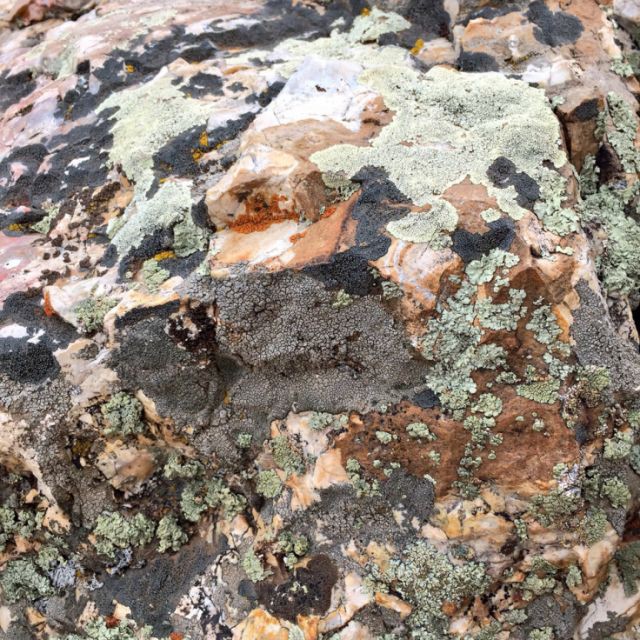
 I think Rachel de Moravia’s work in Burning House Press does a lot for this practice. It’s the idea that you can find tenderness between the roughnesses of directly useful language. You get fun lines like this: “This close-packing causes minerals of this group to be heavy and makes them difficult to scratch, causing a libidinal rush of fear spreading anarchy with no erotic subtext.” where the dry subject matter can be happily cracked open for metaphor. I think this is what I like about this practice, the way that you get to prise something open for meaning when it’s actual meaning was meant to be entirely instructional.


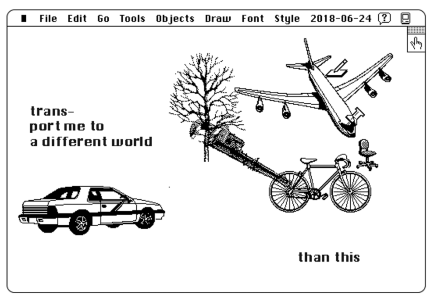
So apparently there was an entire magazine of weird things that lived inside a fax machine network. It’s a cool idea to kind of dial in to find this weird junk, a very early internet experience. You can pick you way through the entire artefact here.
 
 I particularly like the layouts where there is an attempt to present part of the page as structurally raised. Oh, and early 3D graphics.


Cotton Xenomorph has given us some great stuff recently. I like, in particular, I Want to Be the Person that Names Hurricanes by Keegan Lester.

“… A teen boy
 climbs a rafter above the subway, shimmying
 out little by little across the steel beam,
 the lightning before thunder, humidity like a kiss
 to his forehead after opening
 an oven door, to meet a woman on the ledge
 readying herself to tumble, while everyone
 continues walking toward where they hope
 they will arrive, looking up only to confirm
 they’re not the thing about to fall or be flattened.”

I like these lines about what we often think of as “the normal people” in poetry. These are the unwanted bystanders who look on at the poetic situation and don’t understand. They’re ten percent more stupid than the poet, and have no internal life — which is all the poet will ever have. In most situations, at least. Here the crowd is poetic because they want their survival in some way, it’s not really the boy that is jumping that is the subject, it’s the crowd that’s looking at him and dismissing him as not being a threat to them.


This week’s jam has kind of only been Sigur Ros and Dawn of Midi because I have been enjoying the world of work that has deadlines. If you want to listen to Dysnomia again, and feel like you’re falling forward for 45 minutes, you can do so here. Otherwise it’s always This will never happen by Herman Dune.


Thanks for reading Etch To Their Own. I am diligently working my way through the tor.com book and enjoying the very clever ways in which sci-fi writers express magic, hopefully I’ll have enough of it in my head for next week. Our Sammy did another poem, which I feel does clever things with the circling rhythm but I’m not really smart enough to explain it. Hannah did a cool thing in Bulgaria. Tell your friends that they too should sign up to this nonsense for it is good and full of roughage.

Taking a Walk

Etch To Their Own

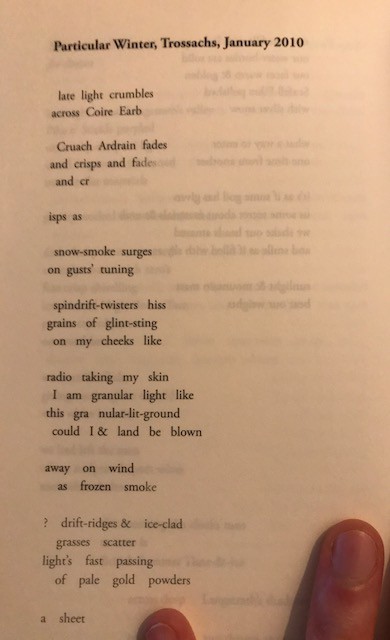
Mark Goodwin’s Steps is a collection to be envious of. If you’ve ever tried to write about a walk you have been on that really captures the sense of narrative you feel while on it, and failed, you will also share this feeling.
 The collection is one of purposeful walking in Wales, England, Spain, Ethiopia. What Mark captures in these poems is the sense of the sublime as Burke wrote about it. The land is not an inert thing, just moving slowly, like giant slow waves walking as you are walking on their backs.
 
 To have this, the walk must have threat; it must have a pressing sense of coming pain, for you, if there is a misstep. Mark brings this sense of looming threat in through sets of images of things being consumed by other things, like sinking fruit, or a sudden change of scale from that of a coffee bean to a bird in flight. Nature takes from you here; nature reminds you that you are part of it on these walks.


The layout of the poems is interesting too — with notational mention of location, of adding greyed-out foot-note (no pun intended).


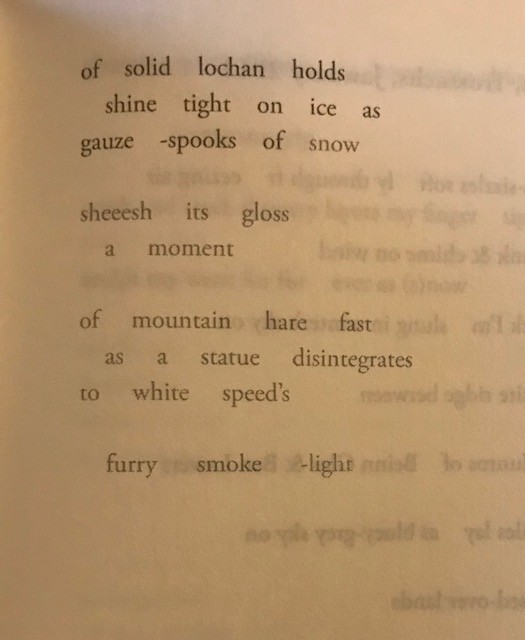
These extra images sit alongside poems, with the direction of travel, locations (such as being in the graveyard, then the church) and provide the kind of narrative placement you need to know the poem is going somewhere. And they always do. The body is in opposition with the beautiful world surrounding it. The body’s want to exist within it is never about domination of the earth and stone, only the acceptable trespass. Later there is a desire to be blow away like fog, with the ground beneath, as if by obfuscation the body and the earth are the same thing.


Here you see the poem fade out, the dream of not existing happily becoming radio static, being everywhere, and being transmitted.
 
 Pick up Steps from Mark Goodwin and Longbarrow Press here.


Really enjoyed the foxing here:

in a dream, I chewed my way free
 from the borough, to swallow the light,
 but all I know is the wolf he raised
 from the dead.
 I ask for a shovel to dig us out
 & he calls me fox, sly bitch,
 says I am trying to trade him for the sun.

from Portrait of the poet as her ex lovers grin by Chestina Craig in Moonchild Mag.
 
 And these crows by our Sammy:

can you come to bed?
 because the bad dreams are gathering
 and I’m not even asleep yet.
 like crows on a line
 or crowds of gulls eyeing up
 sandwiches by the sand
 human hands no match for their beaks
 these dreams watch and wait.

from Can you come to bed? In Cabildo Quarterly.
 
 Oh and these horses, by Rosebud Ben-Oni

but you don’t own one a horse, how do you know anything

— & to that no I’m not really

Asking
 Who wants to own when you can love
 Who wants anything but love
 Who but my dear spacehorse
 The only
 In which I can breathe & not worry about rent or hang-ups or titles
 Or deed just spacehorse & me
 Fucking up your Sundays & your gentle seas

from {Horse! Love! Never! Dies!} in Electric Literature.


This week’s song is Solo by Getter Feat. Party Nails — which continues my streak of listening to squeaky sweet pop music.


And actually, also this which I’ve also had on repeat: Say something loving by The XX


I hope to see an 800 year old tree, that has been conserved in some way since 1908 — the same year modernism landed in England inside Ezra Pound’s head. I know I’ve done that one before, but it means that people were thinking about old romantic trees that need looking after at the same time as new things were springing. I don’t know what and why this is and I hate it. Tell me about love. Actually, don’t, there’s this twitter thread that has it covered. I feel that I am full of all the good words, but that I am too tired to use them. I hope I have been writing them down as they come. I know I wrote some down like this today, rushing room to room looking for a pen, then for something to write on. I could feel the good words slipping away like sand in hourglasses as I did. Enjoy your bank holiday if you’re having one, the best thing to do is to be happy with how little there is to be done.

Look, we are not unspectacular things

Etch To Their Own

Ada Limon’s The Carrying is a poetry collection of wanting and possession. Major themes of her childlessness and the desire for absent men, plants, life, carry through every poem. There is deft control here, nature is evoked, but it is gardened, it is wild but not hungry like a wolf, more like the strains of a hungry child.

There’s a sense of healing throughout, that there are normal things to do in life that make times stable and give us time to fully work through our traumas. Yes, there are always things missing, yes, not everything is in place, but just existing with other people is pretty good.


There are dreams too. Dream poetry has a places a little like translation, in that there is something really telling about the way that the author decides to present the underlying messages. You can’t talk about dreams without evoking Freud (I guess he invented dreams?) because even in the talking you’re interpreting. So when Ada writes of a dream about a giant crow’s head poking out from a tree at her, you know the subject has a subtext which she is presenting to you already analysed.

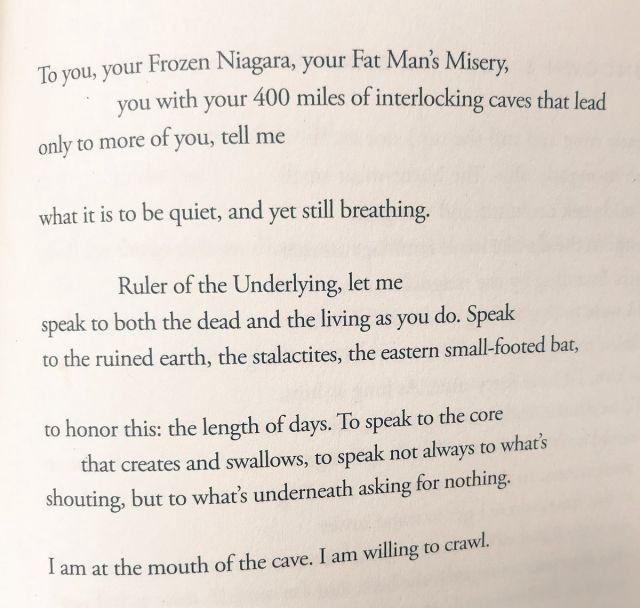
“I am at the mouth of the cave. I am willing to crawl”

And that’s where the magic is in these poems — there’s no howling. There’s no rage at loss and there’s no madness presented in the moment. Instead there is the reflection. Everything passed back to the reader through a mirror, a well lit photograph. In that there stands out powerful lines that will knock you down if you’re not ready for them, which often you’re not.


The poet is in control of what she is presenting here, the feelings and the pain are those that have been processed in some way. Anything left out for you to cut yourself on was meant to be there. This isn’t to suggest sterility, or any kind of detachment, just the full embrace of knowing your own life and then presenting it back fully and nakedly — without shame or guilt.

Pick it up from Milkweed Editions here.


Kaveh talks about his rejections in the #ShareYourRejections tag — and it’s a good thread that is full of self understanding.


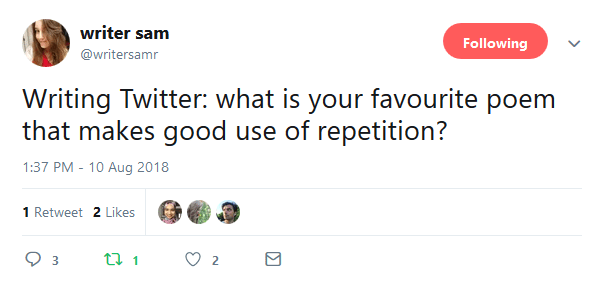
Sam did a good tweet, you should RT it.


Cathy Ulrich brings us another kind of otherwomaning in this little story about the ballerina that’s fucking your husband.


I like this story for the powerful sympathy and respect for the ballerina in it.


Salo Press has opened up for chapbooks of up to 32 pages, named, saucily, The Flirtations.


This week’s song is… a live set from Floating Points on KEXP. It’s like the electronica you’d expect from floating points with a really jazzy inflection, so I love it. Pretty wicked guitar solos too.


Thanks for reading Etch To Their Own. Hopefully getting through this lovely thing from Longbarrow this week, so consider yourself trailed. I wrote this while waiting for someone and then went for important drinks. This is very on brand for me. The drinks were perfect as was the company — the not unexpected effect of snatching time away from the week.

Friends, Romans, Countrymen, Lend Me Your Years

Etch To Their Own

Annie Earnaux’s memoir is a strange memory-object to contend with. It recounts the years of her life between birth and now in a broad and structural way that is deeply familiar. This familiarity comes from the years in question being those lived by baby boomers, probably the most culturally over-represented epoch of civilisation for a few centuries (dear social historians, please write to correct me).

They used to refer to my generation as “echo-boomers”, and now refer to us (and much younger people) as millennials. That old naming convention tells us a little bit more though — that the 90s and early 00s was seen as the fullest ascent of boomers, and we were meant to be as privileged as they were. Of course this isn’t quite how it has ended up as being read, although there are similarities.

As such my reading of this memoir was one of deep familiarity. It is the story of the majority cultural force of post-1945. It’s the reason why you still hear songs from the 50s at Christmas time.


My copy hung around with me a while, even in the rain.

You can see the creaking of French empire in the first half, with Algiers, and how this rustles under a safe and mostly undisturbed life like ice sheets rubbing.

There’s the invention of the teenager, masturbation, want in a repressed society that is slowly stripped away. Later, like a wave that follows the initial break Ernaux finds herself able to re-evaluate her teenage years as one of intellectual liberty that can be used as tools to open up herself. This is the 70s. As with all of us, we are surprised we are getting old.

And all of it is deeply familiar. It echoes the sounds of my childhood, the stories that were around at the time, of similar childhoods. They’d created a new image of it you see. You can only break the dam once it was supposed.

The Years, told through various medium of looking at the self, often through describing pictures, through watching the self move on film for the first time — enchanted — brings a kind of softness to all of that can only be seen as nostalgia. But with it the language searches for detachment, it distances and makes the writer and her peers. There is a search for a kind of personal objectivity — as if this memory object could be shared amongst everyone as canon.


I have had some poetry published in Soft Cartel. I’m surprisingly proud of them and have thoroughly enjoyed being brave.

I also like updating my /writing page on my website with these things. Remember all your favourite unparseable passages from my literary career with this handy box-set.


“as it veers toward loss and the long past
that lodge with us, you press toward love,”

This was shared by Tom Snarsky today. For My Husband by Ellen Bryant Voigt:


What’s your favourite poem that uses repetition heavily? Answers on a tweet to Sammy.


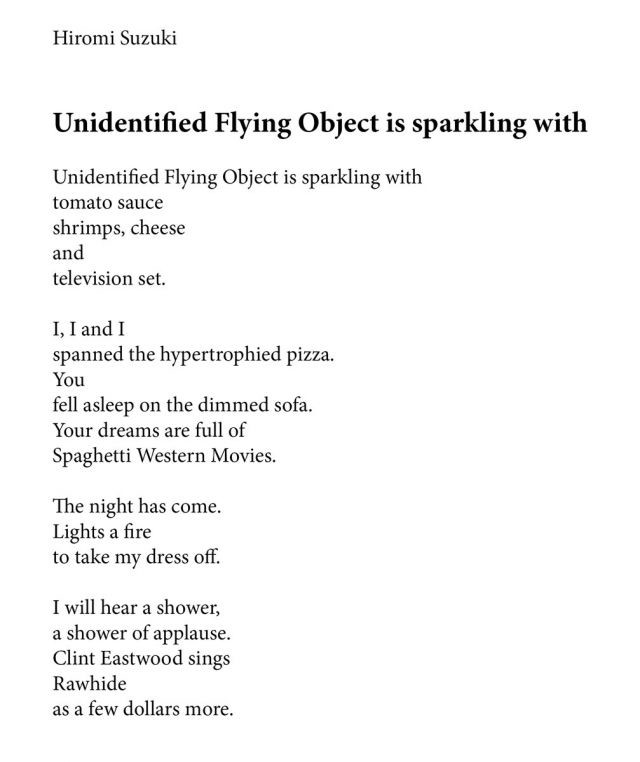
Hiromi Suzuki had poetry in Perverse — a way to have someone send you poetry on a Monday, if you can’t wait until Friday.


This week’s song is East Harlem by Beirut

Another rose wilts in East Harlem
And uptown downtown a thousand miles between us
She’s waiting for the night to fall
Let it fall, I’ll never make it in time

I bit my tongue singing this on the way to see someone. There was enough blood for me to wonder if there was a main artery in the tongue.


Thanks for reading Etch To Their Own. It was written by @CJEggett who has been having oddly domestic daydreams recently. The daydreams remain mad; they’re just quaintly set, paced for a long life. I haven’t said for a while, but you know if you wanted to say something to me (like that you loved that poem, that there is a typo in my name, I asked you to hold something for me while I did something else and it’s been years now), you can always reply to these emails. I answer everyone.

For You In The Dark. Never Ask For Proof.

Etch To Their Own

I was very kindly sent a copy of Nu-Lit’s Micro/Macro zine some weeks ago, and I managed to spend some time with it today.
 
 The zine is one that showcases these very small texts, often in the context of an image.
 
 Here’s a favourite, by j.holth:


or this by Heather Ash:


Or this by Maynard:


It’s interesting to me that often we’re searching for the concreteness of image in our poetry and writing. We’re always looking for the hardest most touchable version of what we’re offering the reader, and yet, as is the case here, using an actual image brings about less certainty.
 
 I suppose this is because it’s two kind of interpretations which have to be parsed separately and then melded together to make sense. In some cases you can happily hold on to a kind of punning, but there’s more to dig out of the play between image and imagery.
 
 You can pick up copies of Micro/Macro here.


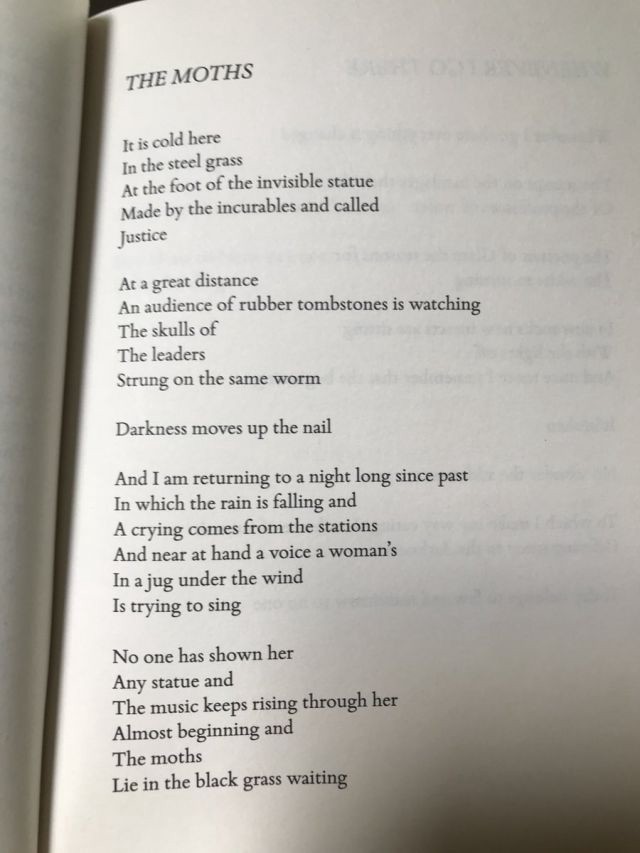
I really like the rubber tombstones here, somehow irreverent and extremely metal


And the power of darkness moving up the nail — as if it were a kind of sundial, but on that is intentionally designed to snuff out progress in one swift, sharp, whack.

~~~

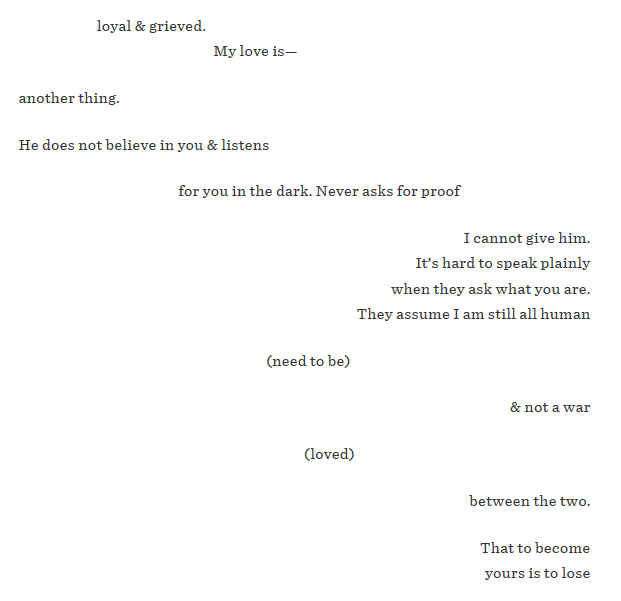
Rosebud Ben-Oni, has a new poem out in Tin House. This time the poet is wrestling with starhorse in the dark. Here’s a snippet:


There’s a more urgent tone here compared to recent poems — a real gripping of the mane. It seems to be exploring the way outwardly we have to be torn by obligation whereas inwardly we’re simple and changed — a war between shared and personal narratives.


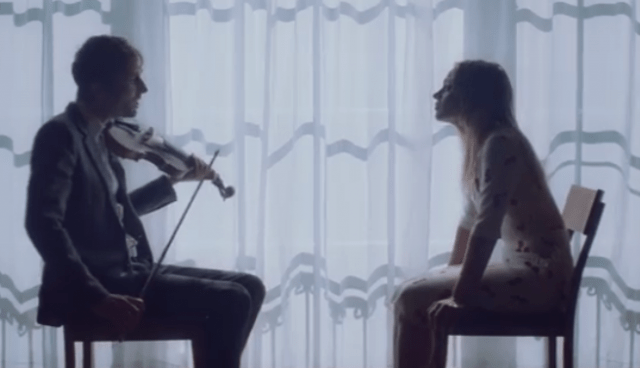
This week’s song is Andrew Bird and Fiona Apple’s Left Handed Kisses


Thanks for reading Etch To Their Own. This boy is tired and so are his hands — having hardened by recently returning to the content mines. I know right. I have some poems appearing in Soft Cartel on the 6th, which might be a Monday, for those of you who are fans of assuming the day of a date. It’s more of the same really, but there’s a nice image or two in the soup I am sure.

Million Pounds Of Clouds

Etch To Their Own

I come to your table and tell you that this week’s newsletter will be tapas style. You ask if it if going to be in a Catalan, Valencian or Galician style — because these are what you would expect when your waiter says such things. You’re a little surprised, it wasn’t a tapas bar last week. No, I explain, it’s the same kind of thing as before (tasty morsels, badly described), but what we serve comes out in whatever order, size and heat the chef feels up to at that moment because he’s dreadfully unorganised. You sigh because, well, it’s late anyway, so you might as well have something of a newsletter.


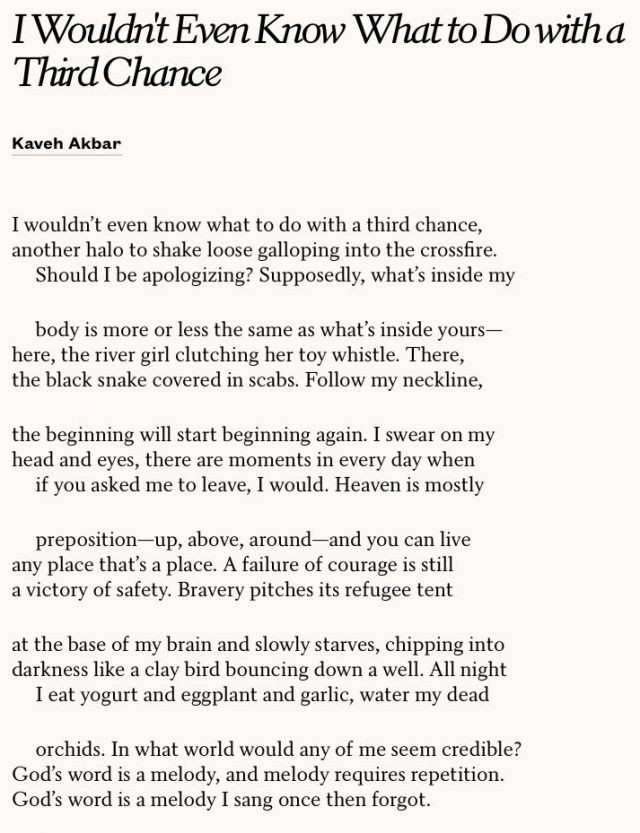
A slightly unshared poem by Kaveh Akbar from earlier in the year (with thanks to Ben Read): I Wouldn’t Even Know What To Do With A Third Chance is a poem about the graceful losing grace, it contains the assumption of having had grace to start with and knowing its shape at all.


Of course it has those lines that sing like bells in your brain: “A failure of courage is still a victory of safety” and those lines given two meanings by being split — the food and watering the dead, then transforming that in to orchids. Which is a sign of the ritual we use poetry for, to say that watering the orchids at night is the same as tending to our dead or to our grief. We create power with language, in a shape and full of grace and then transpose it into a living action so we may carry it out into our lives.
 
The third chance is meaningless because we are always taking a chance by creating an idea with language and then slipping it into the mud of reality so we can feel it beyond the page. The fall from grace is essential as it is what lets us live in the real world, rough shaped and grazed.

I quite like second person narratives, and if you do too I suggest you let others know here. It’s the natural addressing tone of poetry, so for me it’s got its obvious strengths — confessional and confiding, direct. It is the way we tell stories anyway, to someone, to a reader, even if we’re not addressing them. Think of those Lorrie Moore stories we looked at — the lightness that can be had by bringing the “you” into the narrative. The unnamed other that is important enough to be a “you” that provides some kind of voyeuristic pleasure while being able to obscure the truth of a story. The you is a little camouflage which the truth of a work can be interestingly obscured by.

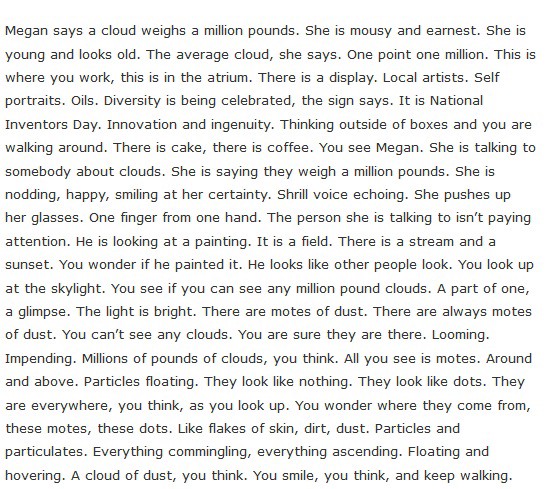
Million Pound Clouds by Ben Slotky published in Spelk is a nice example of second person narration:


I enjoy the swirl of images, the repetition, and the normalcy of it. There’s humanity and warmth in its distractedness; “The person she is talking to isn’t paying attention” and “He looks like other people look” put us no closer to the grit of the scene but place us entirely within its feeling. There’s a fun juxtaposition that waltzes back and forth of the sublime idea of heavy clouds, then only being able to see gathering dust — despite trusting that there are heavy clouds — and then that all dust is just people swelling together into sublime heavy clouds.


This week’s songs are Graceless by The National

“I’m trying, but I’ve gone
 Through the glass again
 Just come and find me
 God loves everybody, don’t remind me”

And Lua by Bright Eyes

“And I know you have a heavy heart
 I can feel it when we kiss
 So many men stronger than me
 Have thrown their backs out trying to live”


I found a poet at my new job. There’s always at least one. She runs most of it on instagram under the excellent handle @itcouldbeverse


I come back three times while you’re eating to ask if you’re food is well while chewing on very nice poetry that was very well cooked actually but impossibly badly described. You’re happy to have eaten and then it’s impossible to get my attention to pay the bill. I seem to be shutting the restaurant. You’re polite and wait, but when I switch off the light and you hear the back door being unlocked you finally say something about how weird it’s been. As a way of excusing myself I say that I have been writing a lot of poetry recently, and that’s very distracting. Of course there was never going to be a bill, I am not sure what you were waiting for.

When My Heart Stops, It Will Be The End Of Certain Things

Etch To Their Own

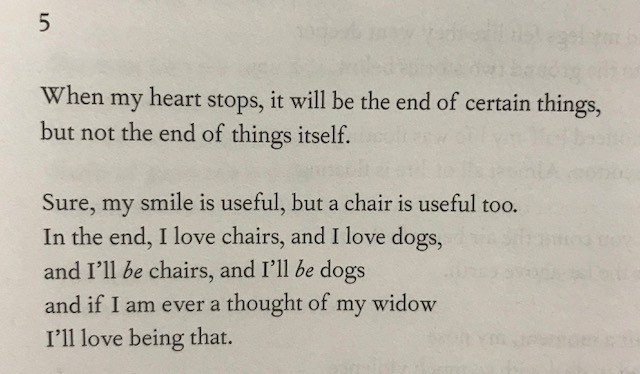
Returning to a sadly departed talent, I have been enjoying Max Ritvo’s upcomming posthumous The Final Voicemails. Edited by Louise Glück and published by Milkweed Editions, this is a tender collection of poetry that move in and out of focus around the end of his life.
 
 Endlessly shifting between the pain of existing in a body and a bright potential of living beyond as an idea. Forever there is a solid reality in the poetry which is then pushed against by the quick hard souls of the feet out into the lightness of space. It’s what you expect, dreaming of being ripples out there in the world beyond your own existence.


It this joyous search for the good existence beyond your own that strikes a chord with me. For example, when you’re nothing you’re everything — and so you are everything you love too.


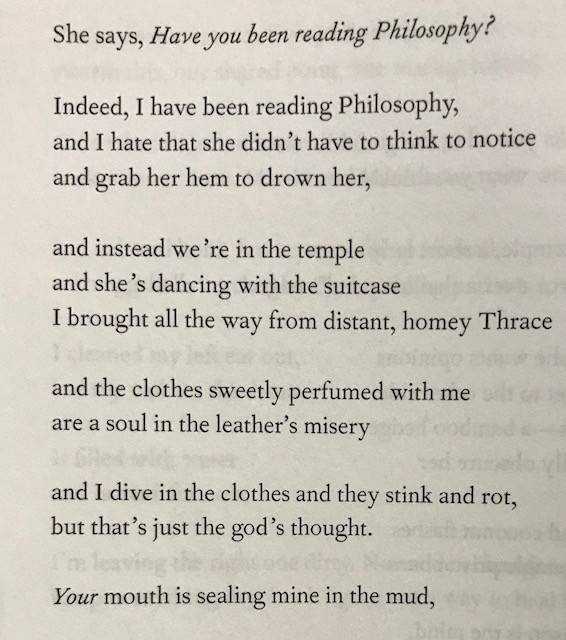
And this is mixed in with classical references. The posed question of how time feels to Atlas — a man with a big burden might see it as unimportant. He looks instead at the sheep devouring the sweating plants — so much effort into giving life, to be eaten by one another. Delphi is asked not what the gods think, but what she thinks, in a flirtation.


The collection was read in my favourite kind of moment — those snatched from someone else. But in this I felt a little greedy — every shiver from a line not really belonging to me, because it belongs to everyone.
 
 The Final Voicemails is out on 11th September from Milkweed Editions


I had some poems published in Terror House Magazine — they’re a bit weird and panicked, but I think they say what I wanted to say. I’ve grown to love the feelings a little better.
 
 This is also a recent culmination of trying to use techniques discussed by some of my favourite poets, and I am hoping the roots show.


Sam also had a few pieces in Terror House Magazine this week, all of which I am in love with. Really clever structure and use of repetition, wordplay and, er, sauciness.


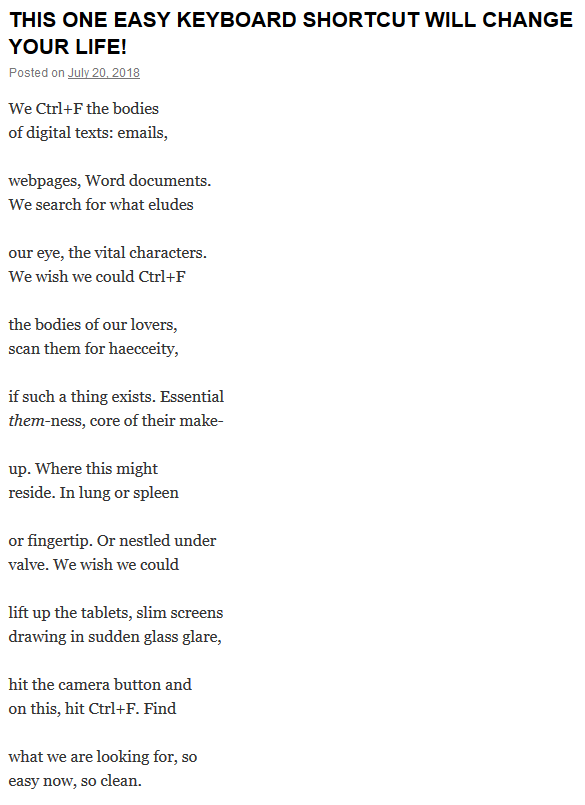
In other ctrl+f news, there happened to be this this week in Eunoia Review by Catherine Kyle: This One Easy Keyboard Shortcut Will Change Your Life


This week’s song is Heartbeats by The Knife


Thank you for reading Etch To Their Own. It was written by @CJEggett — the devil on your shoulder. It has been a good week for writing, but I have also found myself a job — so it is also a good time for confusingly retaining information in jumbled orders. Remember, you can always run away tomorrow. Next week I hope to be covering The Years by Annie Ernaux. My love is yours, frazzles, crispy, and shattering under enthusiastic forking.

In The Beginning

Etch To Their Own

Note: I am quoting from an advance copy of the book, and the final version may contain changes. I’d also like to mention that I will be lightly spoiling this very ancient text — I enjoyed a great deal of it because I had no idea what would be happening next.
 
We’re all looking for an audience — someone to really see us, someone to be a fan of our work. There’s nothing wrong with wanting to have something you’ve created be appreciated.
 
Even gods worry about this — after all, if you’re not being prayed to and sung about, how will your name live on forever? That’s certainly why I write these newsletters, so I may live forever in your promotions tab.
 
The Popol Vuh, translated from the K’iche’ by Michael Bazzett is the Ancient Mayan creation myth and starts with such a problem for a god. A little like Hesiod’s Theogony, our deity is an Ur-deity that exists as a kind of everything in two bodies which build the world through conversation. It’s workshopping a good idea into a great one.
 
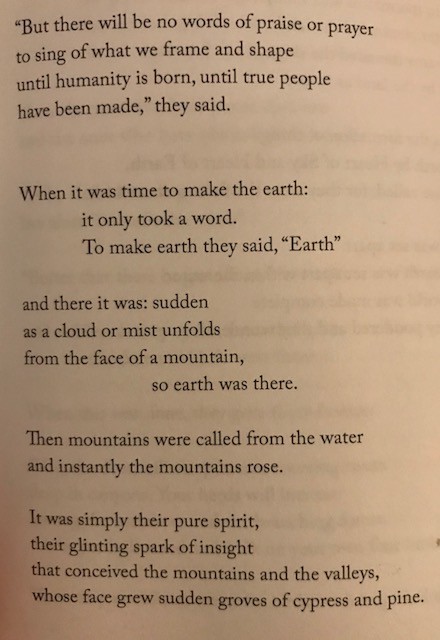
They begin with the usual canvas of nothing and fill it out in the usual way — language brings forth life which is directly connected to them, the former and the shaper. There are a few beautiful turns within the very light and bouncing text:


Then the problems begin — they make animals, which are insufficient to praise them because they only bark and tweet (you can fill in the rest of the farmyard yourself). The animals are punished by being tasty. Next they try making people from wood, and then mud — each less than satisfactory and ending with the golems being smashes up by woodland creatures. And then it is realised that there are beings in this world that are making claims to being gods, despite simply being something more like Ancient Greek Titans, and this will stop them finding the necessary materials to make true humanity.
 
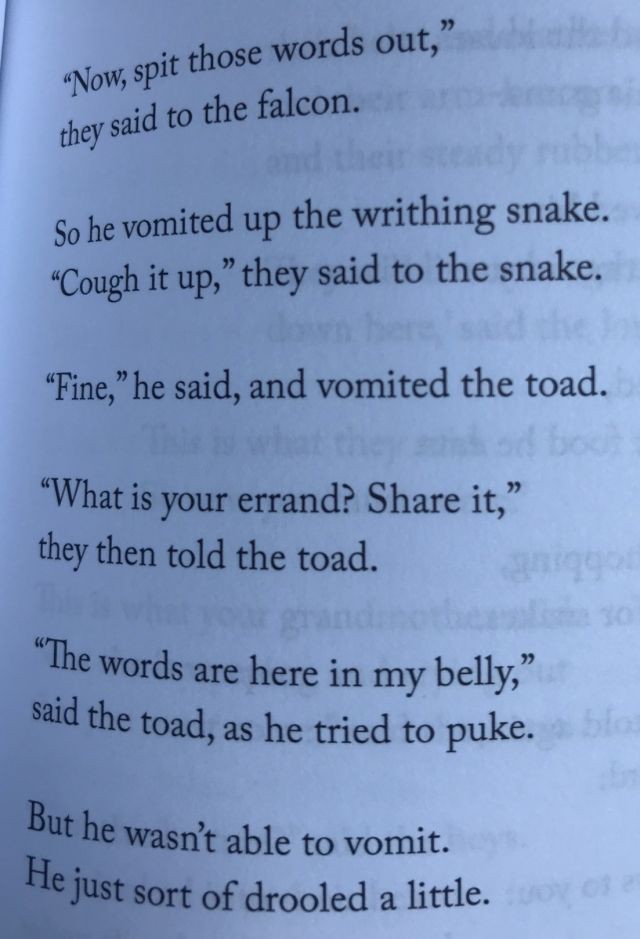
 This is when the two heroic twins arrive (or always were?), Hunahpu and Xblanque, born in a mixed version of eve in the Garden of Eden (if she was from a form of the underworld) and the immaculate conception of Mary. They go about more or less tidying up all these odd usurpers of the natural and intended order — but the reasons and ways that it happens are magnificently farcical. There’s something about the way that these two approach everything as a game because of their ability to shape the world around them that makes for a similar feeling to when you read magical realism. You’re simply asked to go along with the text. So, you have a giant being tempted into a shallow cave with a crab made of leaves only for the twins to convince the mountain to sit on him. You have the worst version of email being used to convey a message from the grandmother to the twins: telling your message to a louse which, in an attempt to be quicker, accepts being eaten by a frog, which is eaten by a snake, which is eaten by a falcon — who all then have to expel their passenger to pass on the message. The presentation is this:


The message itself is an invitation of an equivalent of hell, because currently the twins are playing a ball game above and causing quite a racket. As such the lords of this underworld would like to invite them to play a game with them with the intention of killing them. It’s certainly one way to deal with the flat above. The games are interspersed with a series of trials, and the eventual unwinding of these (which includes a decapitation and a marrow replacement, which is fine apparently for the interim) has such a playful joy that you’re happy to go along with the light touch.
 
The language in the poem has a certain lightness to it, a matter-of-factness that is required for words that are myth. The interspersion of comically terse and colloquial dialogue is also a treat — demanding nothing of the reader other than to come along for the ride. I read the entire thing in one sitting and found it’s pace and strangeness delicious.
 
The poem concludes with the god finally deciding what the right substance is to create true humans, and then deciding what to give them — originally as powerful as gods, seeing all, they were not particularly good at seeing who to praise. As such the gods made them more short sighted. Someone once said (tweeted?) that most novel writers seem to write about protagonists who are exactly like the writer but 10% less intelligent. I feel that’s what’s going on here, looking for the perfect vessel for your desire to be seen.
 
The poem ends with the people of the earth calling for the first sunrise, finally.
 
 The Popol Vuh, translated by Michael Bazzett is published on October 9th 2018 — pre-order it here.


Chen Chen doing really interesting work over here with an erasure of Michael Derrick Hudson’s poems. (If you don’t remember Michael Derrick Hudson is the white chap who pretended to be Asian to get published)


I had three things published in Eunoia Review: You Are Good For Poetry, Relearning All My Lines, and Back From The Flood.
 
Relearning all my lines was a bit of a stab at tying to capture the rhythm of Chen Chen’s In The Hospital and everyone seems to like the iphone line from Back From The Flood.
 
I have two poems going up in Terror House Magazine next Tuesday/Wednesday. They’re both a bit weird, so hopefully they’re at least readable.


This week’s song is Maribou State feat. Holly Walker — Midas


Thanks for reading Etch To Their Own, I write this for you and you alone, everyone else is just a happy mistake. I’ve recently been offered a chance to return to the world of work, which is a joy, but I would expect my newslettering to become a little scattier (or more organized by necessity, we dream). I hope your weekend stretches before you lazily with the promise of rest and at least the thought of some kind of delicious treat. Mine certainly does.

Burn It All Down

Etch To Their Own

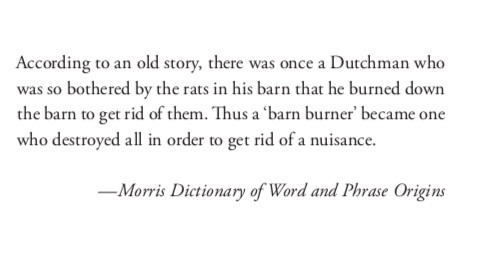
Erin Hoover’s Barnburner starts with an epigraph that seems destructive:


But in reality is a bold statement of wanting wholeness and truth in life. Through this collection of poetry that feels like it pulls a lot from memoir writing — that confessional, confiding tone that’s designed to pull you in like a close friend — we’re convinced the barn burner of the epigraph was quite reasonable.
 
 Here’s a little of what brought us here:


(You can read all of this poem over here.)
 
This is a keystone poem to the collection, one that in some ways lays out that desire for completeness. These poems are compared to murder stories, she suggests she is not asking the reader to do all that much leaping as there are no gaps — unlike Sappho there’s neither the smudged lines of desire or the fragmenting for interpretation. There’s no shying away from the truth of it all — there’s no hiding details about real life. We hear of friends on drugs, of family members navigating fear with children, and her own childlessness.


And these stories push against patriarchy and capitalism in this way. The completeness of the telling cannot be unpicked, the open truth of the poetry and stories within means there is simply no room for the story to be told any other way. Because every line is negotiated into existence, firmly placed with an action and then the defining commentary, the work seems entirely canonical.


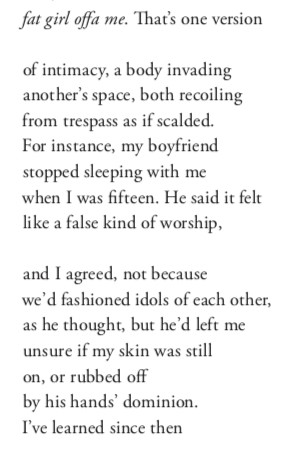
This is displayed in If You Are Confused About Whether a Girl Can Consent:


This form of finding a truth amongst confusing versions of what looks a bit like a truth — and the willingness to force through to an objective reality is what these poems are partly about. Later in What Is the Sisterhood to Me? we get the line

“My boyfriend knew what so many men know: if you don’t admit it, it’s not true”

in the context of him being hospitalised “because of some dumb bitch” with a fire extinguisher which shows the poet searching for truth and ending with the threat of how weightless a fire extinguisher feels in her hand.
 
 There’s things we experience that we let wash over us, and there’s those that we need to grip tightly to make reality — otherwise they’ll slip away too and we’ll not be the owners of the canonical version. This is a collection about gripping on to every experience until the world is as solid as could be.
 
 What do we take from it all? Maybe just to live your life open-ribbed, accept that sometimes you do need to burn the barn down if you really just want rid of the rats.
 
 Read more about Barnburner and preorder over here.


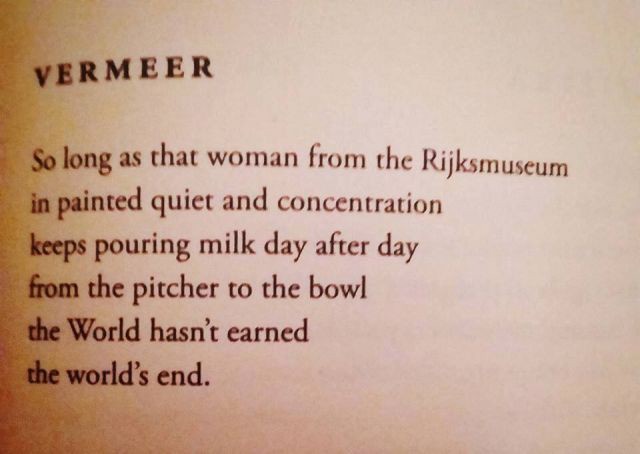
The world hasn’t earned the world’s end — not just yet anyway.


Helen McClory’s Farm at The World’s End is one way it could go however.


Our Sammy has something in Eunoia and something else on her blog. I especially like the bouncing ghosts.
 
Our Hannah has a short story in Brilliant Flash Fiction Mag and in a powerful piece of concrete editing you’ll find yourself having to scroll quite a long way down to find it! It’s like falling between the tracks yourself.
 
If you’re our at all, do please let me know when you do something very good online as that’s kind of what this newsletter is about :)


Really enjoyed these snatches of odd spacey jazz from Portico Quartet


Thanks for reading Etch To Their Own, especially if you’re as cool as this. It was written by I, @CJEggett, with my eye closed in that CA Conrad style. Except I obviously didn’t proof it. Subtle? How dull! Most likely way we’re all going to experience the rapture when it comes. Remember, there’s nothing wrong with holding on to a nice idea.

Maybe our most real timeline resides in another verb tense

Etch To Their Own

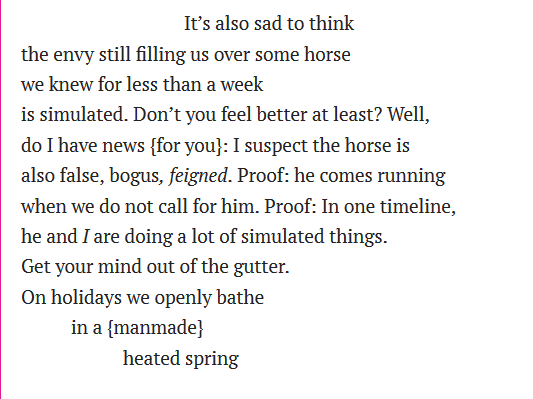
Our favourite horse poet, Rosebud Ben-Oni, is back at not exactly talking about horses again with Poet Wrestling with the Possibility She’s Living in a Simulation.
 
 Listen and read the full poem here (it really is worth listening to the whole thing if only for the “he and I are doing a lot of simulated things. / Get your mind out of the gutter” delivery)
 
 Here’s a snatch of that part:


Rosebud’s horse poems (which is most of them) are usually about some missed love, some opportunity that has slipped by, or was had but now dissipates across time.
 
 This one takes on an even more metaphysical task of whether it’s all simulation. Whether there is meaning in thoughts and action. After all, if it is a simulation, then the value of meaning taken from it is the same as the value of meaning taken from what is considered the canonical reality.
 
 That canonical reality the jealous voice in the poem that the poet is arguing with — the idea that there should only be one narrative and others (other experiences with, er, “horses”) should be either marked down as simulation or disregarded. It makes sense, the voice demands to be the only reality because it feel it might be destroyed if it has equal value to a simulation.
 
 The poet turns this back in on itself however by repeatedly resetting the simulation — and in doing so folding more into it each time. A grander vista is provided on each reset, as she sneaks everything into her world — which has been called a simulation.

It’s too bad that all our timelines are inherently self-destructive.

But even this is given over, as she accepts that that she is part of the simulation too, that there was no timeline that can be remembered that contained all equally and fairly as a landscape without regard for people.
 
 Sartre said, of our real meaty world, that there is no love but the deeds of love — but when you’re levelling it all to simulation, does a deed differ from the thought?


Rob Palk provides some very lovely and uplifting words about being a debut novelist and getting there later than you think but actually a totally normal time. Like when you and your friend are both late to the pub, happily.
 
 Compare and contrast with this Tim Clare interview with Claire North who published her first book when she was 14 and has published a total of 20 books. No, no, honestly, you won’t want to hang yourself.
 
 Both are full of particularly useful answers to those anxious feelings of am-I-doing-enough-quick-enough-well-enough-enough-enough!


Interesting discussion on the idea of using italics for foreign words — and here’s a brief mention of the “un-italicised flavour of my tongue” by Omar Sakr in my review of his Wild Houses.


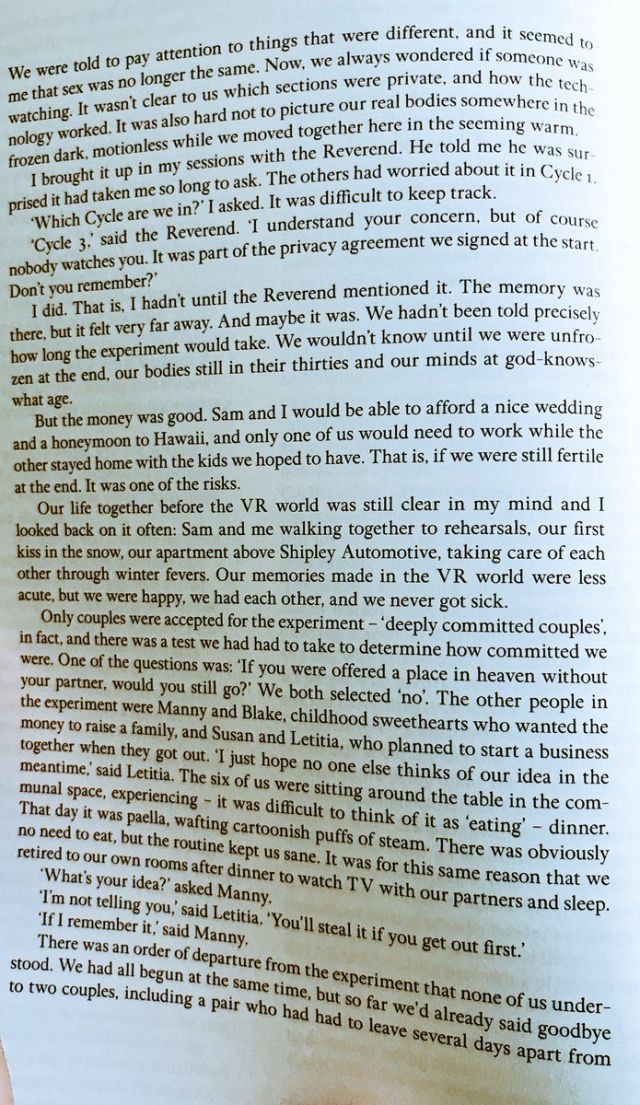
The White Review’s current issue has a similar theme to our Rosebud’s — that of simulation. It’s a short story of a group of beta testers in a deep-sleep VR world. They’d be frozen in their young bodies and woken richer and in the future. The VR system though is one of similar questions and full of glitches, which must be reported. Have a taste:


This week’s song is Cat Power — Cross Bone Style


No idea why these dance moves have not been ripped off yet.


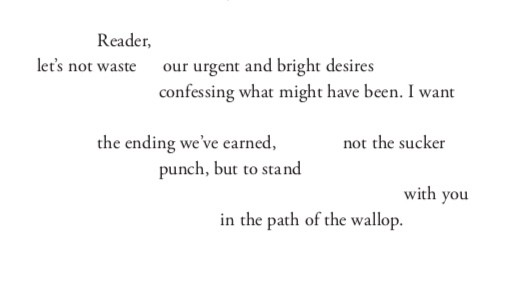
Thanks for reading Etch To Their Own, which this week was written 10 metres from that pub on the corner of Greenwich market while visiting some family. This is my best tweet. This is the best headline. It’s been a big week for feeling things so it was always going to be a poem like this. I have some poems coming up in Euonia Review at the start of July, and probably more some place else because our Sammy kindly gifted me a Duotropes subscription — if you don’t already follow her, you ought to as a display of my gratitude (and she’s like, 10 people away from 500). Oh, also, I have Erin Hoover’s MS to read over — which I requested entirely on the power of the line: Reader, / let’s not waste our urgent and bright desires / confessing what might have been.