the audiobook for everyone’s favorite generational worldbuilding game
Author: CjEggett
Good Idea #1 – No Hexes, No Masters
Slow PlayNo measuring tape, no hexes, no masters
I’ve recently had the pleasure of playing the new Adventures of Robin Hood (Kosmos) board game. I covered it back in issue 55 for Tabletop Gaming magazine.
I interviewed Michael Menzel for the piece. You can watch the public version of that interview (which was quite early in the process) below.
The Good Idea here is that instead of using ‘spaces’ for your characters to move through, or asking players to get the measuring tape out to show how far Robin or Little John has moved on their turn, the designers provides five meeples for each character. Of these, there are three with elcongeded bases that reach out right behind them.
To move players place these end to end, and then place a standing meeple at the far end to show their final position. There’s also a ‘sprinting’ meeple for moving even further.
The Good Idea is that there’s no abstraction on the board. No need for a graphical layer over the beautiful art. If we play games (now) in part to avoid the digital world and the deluge of data someone has decided is necessary, then this is an example of leaning in to the physical facts of board games and making the most of them.
The Good Idea here is an extension of the rule: “no plus one swords”.
Flesh & Blood Trading Card Game | The Adventures of Robin Hood | The One Ring
Love, Bring Myself
Etch To Their OwnFor the month of April, which is national poetry month somewhere, I am exchanging poems with a friend every day, using a little of the previous poem in the next. This means sometimes using odd automatic or found-text style tricks like using translation tools, or breaking up a line and writing out from each. The thing that these techniques have in common is that there is a creative element in the curation and laying out of lines, rather than a generative effort.
Which is where we come to Love, bring myself by Dominic Leonard (Broken Sleep Books).
Dominic has plucked lines from the Mystery Plays (a series of medieval plays all performed on on day across the city of York in celebration of Corpus Christi) and arranged them into a series of sort-of-sonnets, take a look:
Naturally, as whenever we rip apart a text and start gluing it back together, we understand that in the reconstruction there is a new meaning formed. Often we can obsess with this idea of destruction and recreation to mean something else, because it’s a bit punk – like paving over another meaning with this new one.
The poems are smart, fun things to pick at, trying to find the person being addressed. But it is impossible to escape the text that you are working with – here there is a pleading tone, which comes from the prayer aspect, the heat of wanting something lives throughout – and even “our bodies stun me with horror” rings out with biblical shame.
The poetry is staccato of lists where each word pulls away from its neighbours, sometimes leaving something interesting between. Everything like this is in the translation – the reference to Job 10:21 sent me looking for the line, which can be translated variously for different purposes and I suppose is the point of the work, to find a new way of breaking and seeing the texts with a new found personal intimacy away from the medieval crowds.
Pick up Love, bring myself from Broken Sleep here.
~~~
Love Takes Risks is the wonderfully named symposium on the poetics of contemporary small press fiction. There are recording of the symposium up on the website here.
I really recommend to all of you who have heard or read my endless chatter about Claire-Louise Bennett’s Pond to listen to the very articulate Liam Harrison compare the work to Beckett in a way that really cuts through to the bones of what makes it great. ~~~
This is a very jolly poem by Carolyn DeCarlo called The Ultimate Freedom of Space and Time, which includes the lines: “My house traveling to France in 1778 to have sex with Marie Antoinette after meeting her on the internet.
My house sitting at the end of Marie Antoinette’s bed while she sleeps, telling itself the story of their lives together.”
~~~
I think I have a poem out somewhere, oh, here: Essay on Biophilia published in Peeking Cat.
~~~
I have so many Jiffy bags now from all the lovely people who send me books that I feel like I have no choice but start a small press. Sadly we are closed to submissions at this time. Thanks for reading Etch To Their Own – I think I am going to move the archive to my website and away from Medium at some point soon, as it seems like it might be better to actually use the site I pay for or something? This is a nice object from Guillemot Press.
Another last day
Etch To Their OwnAnother Last Day by Alex Lemon is a kind of self-apocalypse in a way we’re all familiar with — the sense that yes, this is all going to end and there’s not much to do about it, so taking an affirmative stance on the end of the world is the closest thing to satisfying control we can achieve. It’s almost auto-accelerationist in a way, as if the coming end for the self would spur others on to making a better set of choices for the future. If only it would get so bad that I could be immolated martyrly everyone else would really have to take some action — a little like the rising sea levels, we all know that once we have a flurry of eels around our feet in the local Waitrose someone might actually think about doing something.
Here’s a couple of snippets:

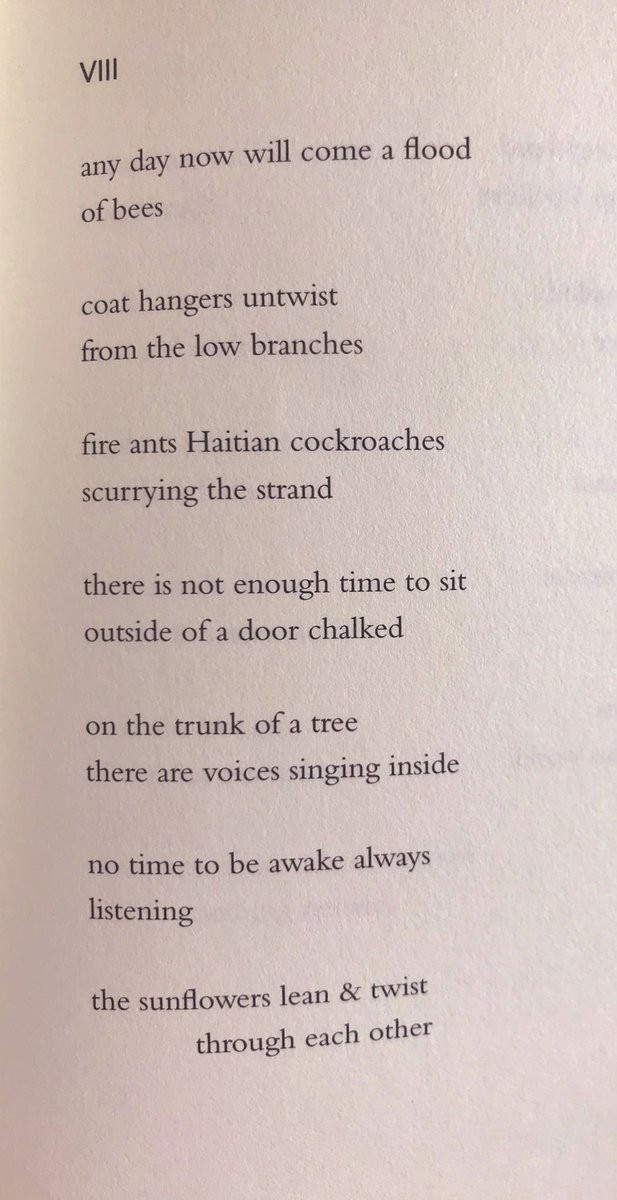
Alex uses a tone that isn’t unkind. This isn’t suicide poetry. There is self regard, while saying “I am tumbling king” is an undercutting, there is the acceptance of some kind of grandeur about it — even if distant, unrealised and unearned. The language and that presentation of ideas that run against one another (like kenning, discussed here) to form another meaning, like: “a flowering fist.” This could be a fist (a violent symbol of strength, power, etc) flowing from a clenched bud to an open palm (expressing honesty, openness, friendship). Equally when a plant flowers is it taking part in the most vital part of its existence, it is achieving much of what its life is about — and as such — this could be translated as a fist archiving its purpose, arguably to be thrown. Of course, some of it is just undeniably poking at bits of my brain with a candy cane, like:
“The day ungloving suddenly”
There’s poems later of bodily destruction, and not just the death of the conceptual self — being eaten by fish, being drown and made soft by the water so the flesh will hold any shape. These passages show the tenderness of all Another Last Day, that despite the early sense of accelerationism, the body is still present and our main way of expressing our weakness.
M S Merwin died recently — and if you’re like me you’ve probably only heard the name before in reference to his studies of Ezra Pound in passing. If you’re not like me you may not have been introduced to Merwin’s work until the last couple of weeks where there has been a collective outpouring of his very good words across twitter.
In this interview in the Paris Review we learn about how the deep ecological stance of his work is influenced by his sense of powerlessness in childhood, with the obvious parallels in the world’ paraylsis on inevitable ecological catastrophe.
There is also a nice part on the problems of liking Ezra Pound, explaining the difficulty of trying to enjoy the Cantos as an intellectually coherent piece.
This interview with Mike Corrao about his very weird work from 11:11 Press, Gut Text explores the differences between film and literature in a way that doesn’t just crunch down to the argument of “it’s all art and thinking right”
It also covers the power of skimming, which is an interesting thing for a writer to want from their readers. It could be thought of a lack of engagement, but because of the comparison to film here there is an idea of passively taking something in and letting it process behind the scenes later.

Thanks for reading Etch To Their Own, the written version of taking me to the pub with books in it. The me in the previous sentence? That would be @CJEggett. The best thing about that M S Merwin interview above is that I discovered that he lives in Hawaii in a place called Hai’ku — which is a fun place to live in one of the smallest states — we assume there’s three streets and the one in the middle is a bit longer than the other two. Sammy sent me this, which is in part an incredible poem, part a note on all the times she had to pick up orphaned sentences for me. Speaking of Sam, can you help her find this poem? This is a great title for a poem, and it delivers. I do really like the crossing out in that last one. Possibilities are a set of lies created by destiny — but that doesn’t mean we shouldn’t try to find the most fun lies to enjoy together.
On Being Grateful, Delayed
Etch To Their OwnI have been feeling particularly full of life this week, and very grateful for it. You can come across some good luck and find yourself being suspicious about enjoying it or acting on it, but I am glad that I have people around me who gently guide me back to more gentle places in my own head where I do the right thing. This, then, is a bit of an exposure of myself. I used to love this poem when I was a teenager. I think I used to tell people it was my favourite. I’m a long way from there now, but for some reason it wandered back into my head. It’s Some People by Charles Bukowski.
Here it is in full:
Some People
some people never go crazy.
me, sometimes I’ll lie down behind the couch
for 3 or 4 days.
they’ll find me there.
it’s Cherub, they’ll say, and
they pour wine down my throat
rub my chest
sprinkle me with oils.
then, I’ll rise with a roar,
rant, rage –
curse them and the universe
as I send them scattering over the
lawn.
I’ll feel much better,
sit down to toast and eggs,
hum a little tune,
suddenly become as lovable as a
pink
overfed whale.
some people never go crazy.
what truly horrible lives
they must lead.
It’s embarrassing obviously. But Bukowski sometimes had the joy of simple kindness. In the same way his work is filled with the terror of pettiness — his sense of smallness of self which drove those nastier poems is the same thing here which give us the idea of needing the help of others to become the better version of himself.
That help is a kindness too, in this poem he’s some kind of misplaced cherub that simply need to be jollied into existence again. The energy of revival here is one where he sends those who revive him scattering across the lawn, which suggests a kind of gnome-strewn lawn after a storm to me. The love he get from those around him hinges, he says, on the fact that he has gone crazy and lies down behind the couch for a few days. He knows that this tenderness is about putting him straight, so he must cultivate his wonkiness. The things that is missing from this poem is gratitude for these people floating around the poet and point him in the right direction — which is why it is something that I could love as a teenager, but feel so alienated from now, while I also reliant on people pushing me towards the better things I should be doing.
It wouldn’t be an ETTO without mentioning Sam has another poem (called Twitch) out somewhere (Thimble), it’s pretty heavy.
This week’s song is All The Wine by The National. Because I am feeling very good about the world.
Thanks for reading etch to their own. I’m really thankful that you’re reading this at all. There’s a lot people around me who make it vaguely possible for me to be better than I currently am. If I was anyone I would be @CJEggett. I have to say it has been a good week. I have a new job that is a little closer, a little better paid, and tickles part of my brain the in way that other jobs might not. It’s sad to have to leave all of the lovely people I work with at the moment of course. I’ve not read much this week because I’ve had too much energy and felt full of too much blood. As a little bonus I was given this by someone and love it very much.
Make Believe
Etch To Their OwnJudson Hamilton’s The New Make Believe from Dostoyevsky Wannabe mixes odd, meaningful places with crunchy names and concepts with a shrugging kind of onlineness that drives his own romantic and spiritual life — Pisa, the first from the collection opens as it intends to continue:
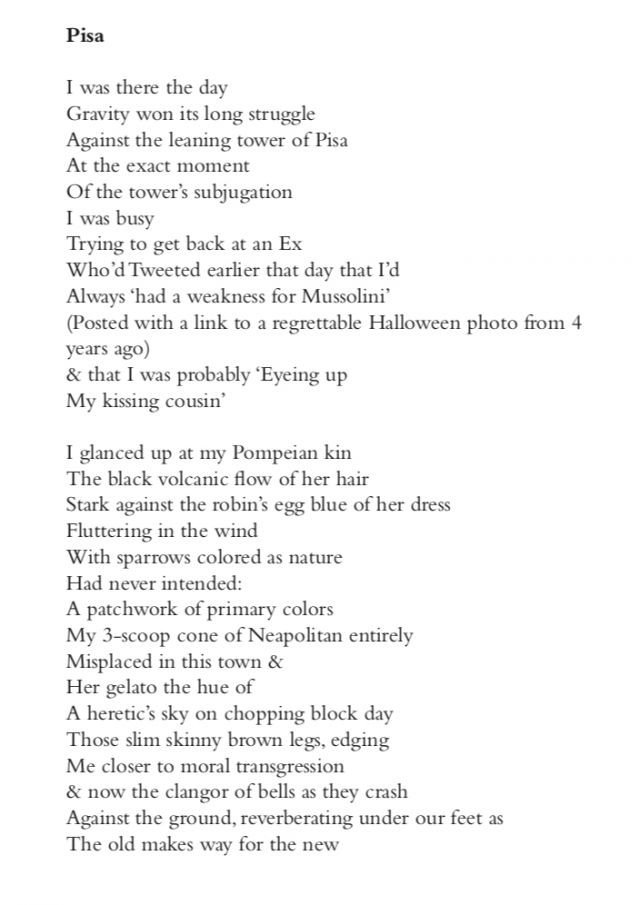
The disdain or wilful ignorance for the monumental happenings around him are a theme — he is missing things because of the webbed narrative in his own head around conquest. A distracting and familiar sense of hyper connection of the psyche to the passing world of the internet.
The poetry is quick, sparse, existing in the moment but for a few flights of fantasy. We are very much in a mode of recording what happened, a kind of “here is the history of a few moments” with little judgement about it. In this way it reminds me a little of Kirill Medvedev’s It’s No Good — although it hasn’t got the element of hiding the critique, it does have the moving around a subject to illustrate it.
Small Talk is a nice example of this, a gentle prodding at something where the subject is talked around rather than directly dealt with — but for the chink of light poetics at the end.

Pick up The New Make Believe from Dostoyevsky Wannabe here.
How about this hybrid flash by K.B. Carle — Vagabond Mannequin — which mixes crosswords and crossword clues with literary flash fiction. I enjoy the idea of it being a game here, we’re always unpicking the meaning of poetry, but we don’t usually do it by solving one down to start.
This week’s song is Open by Rhye — which is mostly about the magically smooth voice that barely wanders about on top of the bassline.
Thank you for reading Etch To Their Own, it was written by @CJEggett with only his 80% knowledge of where keyboard keys are supposed to be, and which part of the body you are supposed to press against them. Still, he managed it. Last time we heard from Judson was for the chapbook No Rainbow. Which was exactly 111 issues ago. Our Sammy has some poems up this week, here. We’ve all been here, when someone asks us something important and fundamental while we have a hangover.
If I am not Mistaken
Etch To Their OwnI found this week’s story through someone looking for an em dash.
Mistaken, by Kaj Tanaka, in pidgeonholes is an odd surrealist piece. Here’s a snippet from the start:
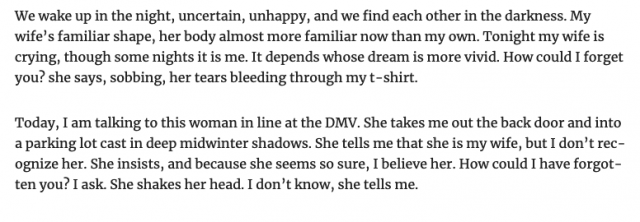
Read the whole thing to explore its shifting sense of person.
In my first reading of it I felt it had a theme of dementia running throughout — in that a person trying to describe the way that they see the world in its confusion before having that removed by the confirmation that the confusion is not reality.
But that doesn’t hold for the entire piece — it works a little like a riddle, with the variations on the refrain of “how could I have forgotten you?” acting as the central question to unpick for the protagonists, but not the reader, who instead looks for the reality of the situation.
It teases at the idea of an unhappy relationship where both parties are seeking some fantastical escape, though their strange vivid dreams — partly because of the infidelity and the forgetting. Instead though, a kinder reading is there in a passage about the dreams — how they try together to have wilder dreams, while also not forgetting one another. This could be their search to avoid the infidelity of forgetting one another while unconscious, which is at worst a sweet thought — what is so bad about wanting to have the best dreams together. It ends with a hint at a cycle too, the man at the office she has been cheating on him with, was him all along — which of course, we already knew.
This week’s song is DJ Koze’s Nices Wölkchen feat. Apparat
XX.
Thanks for reading Etch To Their Own, which really is the Spring of newsletters don’t you think? I like the idea of a stained glass forest. How about it? This is true.
I have run out of compassion for wolves
Etch To Their OwnIf My Body Could Speak by Blythe Baird, published by Button Poetry is an exploration of eating disorders, sexuality, and coming of age. The collection is one about the female body as a public space. The body here for Blythe is a negotiated space between almost anyone but her — her school, her father, boys at school, her mother. Here’s a snippet from an early section:

The style of these poems is of youthful confession, and the anger of realising your voice can only be used for confessions. The reader is confided in, in plain terms for the most part — because to speak plainly about any of the ideas here is taboo. Reality here is one where the body is dressed up in owning language, repeatedly, in layers — a seen and observed object that is changed by its cataloging and description. So the directness of the language here is a search for a cleaning/purifying effect — to let the body just be the body and belong to that one person. This is the attempt to move away from the objectifying reality to the subjective — that is to move ownership from public to private.
It reminds me, again, of a central struggle in Feeld by Jos Charles — a searching for ownership of the self. Here it is presented linearly, but we are aware that the poet is working against forces from all directions similarly to the way Jos uses the metaphor of the “feeld” as a space that isn’t just
The later sections of the collection formalise the struggle, with the poet on more even ground with the world — instead struggling with her own personal definitions of self without the more obvious pressures we see in adolescence. Here instead there is a struggle with the ghosts of her abuse, and the officialness of her new position. Here’s a poem about that sexual violence, and the haunting:
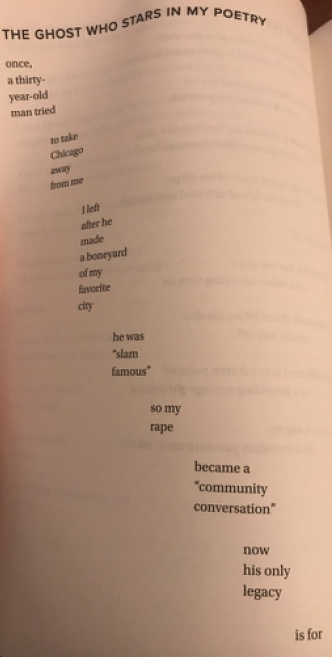
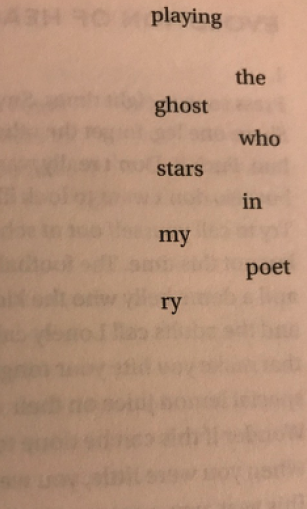
It’s not all about the pain though. Ultimately this is a book about forgiveness. The title of the collection comes from a short poem which simply reads:
If Your Body Could Speak
would she
forgive you?
And the forgiveness here is found in tender, touching poems about love and family where the bonds are obvious. Conversations with her father about missing cigars, the poem that I shared last week What I Couldn’t Explain Via Text, a soft poem about losing the ability to speak during sex, and Pruning Into Art:

Which is heart of the thesis of these poems, how people form and shrink themselves against the world to exist.
This week’s song was listened to on repeat on the way home from work which I was blissfully released from early today, Drake’s Nice For What
Thanks for reading Etch to Their Own. I escaped early today, and this is nearly early too. I loved this story about an elephant’s foot and a selfie. Is this furniture abuse? This is my new nickname and desired body type.
Is that found material?
Etch To Their OwnLydia Davis talks about her writing in the Paris Review, and how her work consists now of mostly found material. She explores how there is a line just beyond presenting “real life” which is a bit Schrodinger cat in that almost anything for her that is observed is “found” and therefore fiction — i.e. there’s nothing that isn’t naturally a story once you believe it’s a story.
She says:
“I realized that you could write a story that was really just a narration of something that had happened to you, and change it slightly, without having really to fictionalize it. In a way, that’s found material. I think it’s hard to draw the line and say that something isn’t found material. Because if a friend of mine tells me a story or a dream, I guess that’s found material. If I get an e-mail that lends itself to a good story, that’s found material. But then if I notice the cornmeal making little condensations, is that found material? It’s my own, I’m not using text, but I am using a situation that exists. I’m not making it up. I find what happens in reality very interesting and I don’t find a great need to make up things, but I do like retelling stories that are told to me.”
This is an interesting thing to compare with this Louise Gluck line:
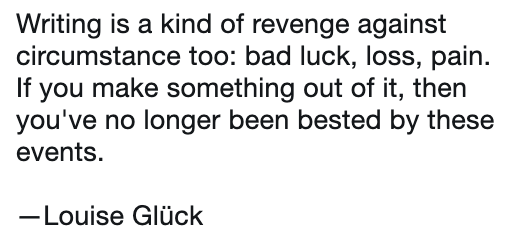
Reality, once observed is fiction. And feelings, once written, are overcome or controlled. It’s the same thing really — it’s about taking control of the events in your life through narrative. This isn’t just to avoid the feeling that you’re a minor character in someone else’s story with no way out, but also to sidestep the idea of being the protagonist of someone else’s story by becoming the author.
Loops, cycles, repetition — this RadioLab show has some really good snippets on things that go round and round.
I particularly like the story of the woman with sudden global amnesia — who is set off on a loop of questioning. The idea here is that the brain, when confronted with something startling like this amnesia is flailing around to try and find a time and place for itself.
The podcast also got me searching for a strange sounding sea monster called a hag fish — which is a kind of deep sea eel which has plates instead of teeth, has a skin that it wears like a hoodie and secretes disgusting slime. It’s a gross horror story and I am sure it will stay with me for some time.
Don’t click this link for the wikipedia page. This might be the worst thing I’ve ever looked up, even the basic dry facts of it are a nightmare.

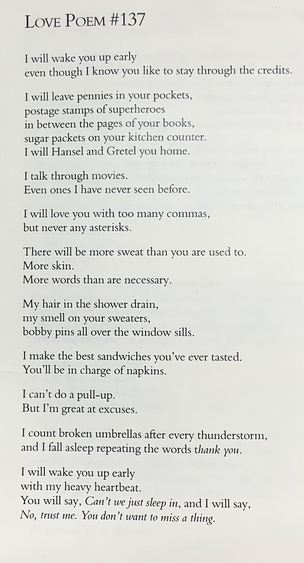
I liked this soppy Sarah Kay poem, especially because of the tweet that went with it — which focuses on the line “I will love you with too many commas,”
I also love the turn in this poem by Temidayo Opeyemi Jacob, in Peeking Cat, called Shedding Off. Here’s a taste of the turn:
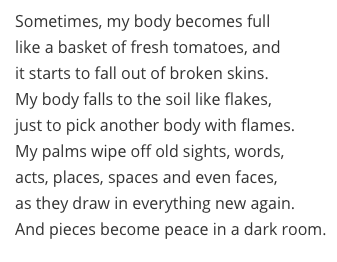
Go read the full thing to get a sense of the bodily fun in this turn towards tomatoes.
Thanks for reading Etch To Their Own, where we welcome readers and Yam Yams alike. This is the kind of astrology that I am into. This is the only acceptable kind of geology. This might be a new fave. Ask you boyfriend to sign up here.
We huddled in the breath of our willful ignorance
Etch To Their OwnTommy Dean’s When the Water’s Came in CX is an apocalyptic flash fiction with the same vitriolic energy as a Henry Rollins spiel. It uses an increasing invective that brings its anger at those who came before with it. The threat here has come into being because nothing has been done, and nothing continues to be done about this particular apocalypse.
In this world, which may well be ours at some point in the not immeasurably distant future. Here’s a taste:

It takes us from the point of our drowning in a kind of active disregard for our own wellbeing to this pivotal point where it introduces the family, the parents. Here is goes a little Greek. Here the scale changes, and we are offered the idea of being children with dreams but still no action — abandoned by parents and tapping into some generational guilt that those before us were intent on damning us with inaction.
If you’re anything like me you love to read about how other writers write. I particularly enjoy Morrisons’ comments about not knowing the “weekdays sounds” of her own home.
The interview explores ideas of rituals for writing and particularly in getting up before sunrise to write — firstly for necessity and then as part of finding the connection to whatever that place the words come from.
Our Sam has a new piece up in the very nice and warming sounding Potato Soup Journal. The story itself is a lovely bit of prose about the dreams of spending foreseen free time well. it’s one of those nice bits of writing where there’s good light and a very gentle sense of time.
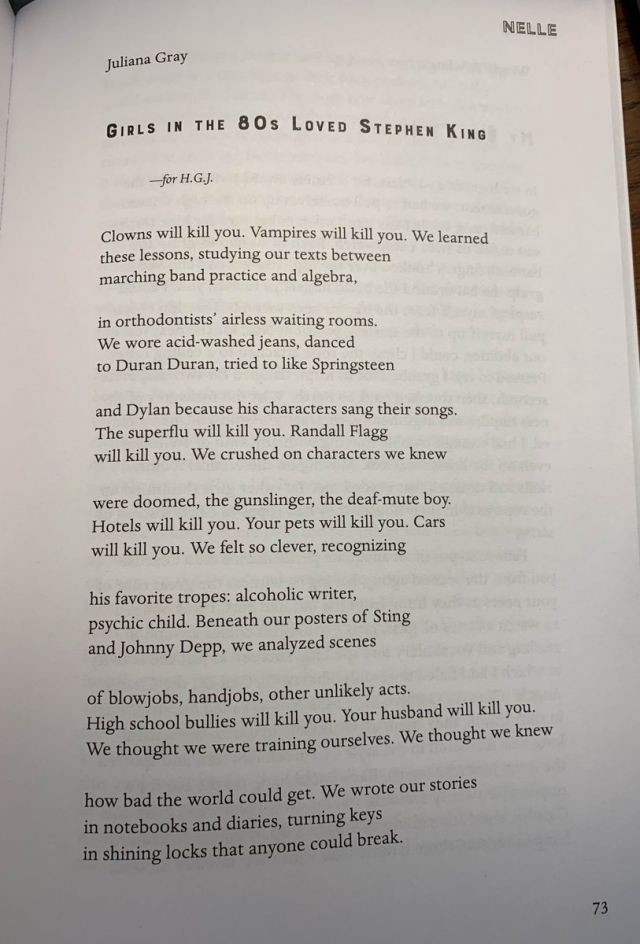
Thanks for reading Etch To Their Own, if this issue was in candy crush, it would disappear for making three things that match line up. Thanks for reading these tired words. I have some joyful books being slowly rowed across the atlantic to me, and I have some I have nearly finished, like Muscle, which really need to find their home in these tiny pages.
 C J EGGETT | Writer & Game Designer