When reading and relaying something about Anne Carson, there’s an urge to simply say: yes, it is her, more of her, in the way you expect tickling the same parts of your brain.
With issue two of The Well Review (which is very good in itself) came with a lovingly put together pamphlet by Anne Carson. The pamphlet is called Ghost Q & A — and it is just that, a chat with a ghost.
Here’s a sample:

The ghost (or ghosts, it is hard to tell if this is the same voice responding) are unsurprisingly interested in the kind of things Anne is most of the time. This includes language and the unseen/obscured. She questions on grammar and there is a suggestion that it is different there, in a way that excludes the living — not that both are equally missing language. She asks about Virgil and is treated to the difference between shame and guilt — here being that guilt is not always observed from the outside.

Naturally, anything about ghosts is about liminality and the Q&A format is one which allows us the sense of something passing back and forth between an obscuring veil. Like the guilt discussed, there is some things, from the outside, which cannot be directly understood by the questioner. Equally, with the unwholeness of the grammar available to the questioner, it would not even be possible to put forth the right answers.
Later there is a discussion about zeros, there is a man whose jobs is the zeros — you can’t put one in until you take one out. This idea of displacing nothing with nothing, and that it is a labour, expresses an idea of an afterlife that can only be partially gratifying for the living.
There are no satisfying portrayals of the afterlife, they are either unknowing entirely — like that which is beyond heaven in Dante, or they are replications of life as we know it without direct pain but still many of its painful structures such as in The Lovely Bones. Here in this version we get a bobbing-for-apples version where we learn that it is neither extreme nothingness nor saccharine replication, but a reassurance that there are the things we need to be human and individual, language, space, movement.
There is a version of Ghost Q & A on A Public Space. This is only somewhat similar to the version published by Well Review, and might be considered an earlier draft of this work or the things that this version is responding to.
But I do very much like how it ends however:
Q does your hair keep growing
A yes but it is apples

Writing a novel on a phone seems a bit daft, but apparently lots of people do it. I have been trying it recently with siri’s dictation, and I like the madness it comes out with — it’s wrong, but it provides a good disconnect from the freeflow of my brain to the editor who deals with it at the other end. I am not sure I could manage the whole thing however without the disconnect freedom that comes with really jamming on a keyboard.
As you know, I started this partly to have a way to protect my brain from the rubbing sludge of everyday life that clogs moving parts and smooths sharp edges. It was also an exploration of discovering what I actually love in literature — it allows me the chance to be as fully aware of the stuff we’re surrounded by, and what I want to emulate and reflect in my own writing. Here’s a better articulation of that from Inside The Castle.
Cool thing I don’t understand of the week.
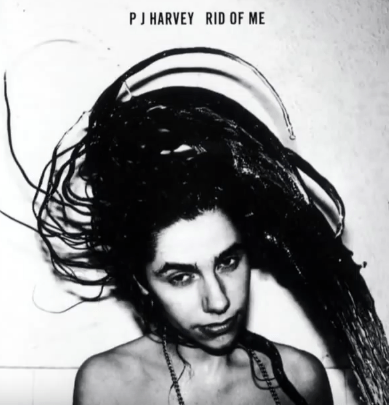
This week’s song is Rid Of Me by P J Harvey
Thanks for reading ETTO today. Did you know that Samuel Beckett drove Andre The Giant to school? I didn’t and then looked it up and turned out that yes, indeed he did. This email was driven to your inbox by @CJEggett, and his loud fingers. It could have been Henry Lee again, but it was that instead. My better half is away at a hen do somewhere, so this weekend should be a good one for a big writing project — but it’s more likely to end up with video games and sleeping. Feel free to do a Q&A with my ghost when the time comes.
Discover more from C J EGGETT | Writer & Game Designer
Subscribe to get the latest posts sent to your email.
 C J EGGETT | Writer & Game Designer